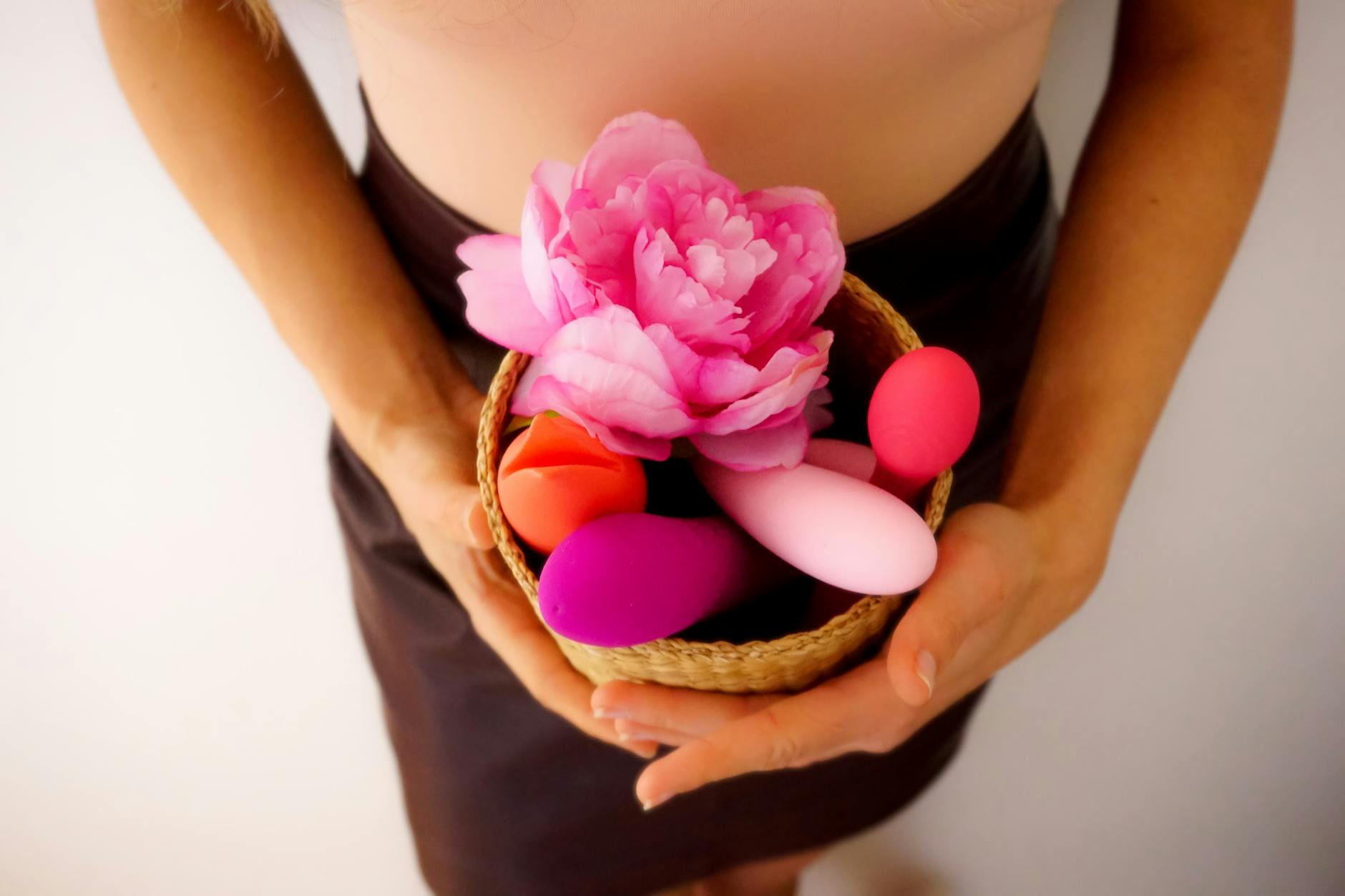
Let's name what actually changes
Chronic illness doesn't erase pleasure. What it does is rewire your nervous system. Pain, fatigue, and sensory overload become the baseline, and your body learns to protect itself by dampening all sensation, not just the painful ones. That protective response is smart. It's also the reason sex stops working the same way, and why standard vibrators often make things worse instead of better.
The good news: lemon vibrators are designed for exactly this problem. Not by accident. By architecture.
How chronic illness changes sensation (and why it matters)
When you're managing ongoing pain or fatigue, your nervous system becomes hypervigilant. Sensors in your skin and deeper tissues start firing at lower thresholds. This means intensity that felt pleasant before now feels aggressive or even painful. Your brain is running on a scarcity model: conserve energy, expect threat, filter out unnecessary input.
This affects pleasure in three specific ways:
First, arousal takes longer to build. Your body isn't refusing desire. It's asking for more time before it feels safe to shift out of protection mode. Second, direct friction often triggers pain signals instead of pleasure signals because your nerves are already heightened. Third, recovery takes longer. After sex, fatigue can spike for hours or even days, making the cost feel higher than the benefit.
What doesn't change: your capacity for orgasm, your interest in intimacy, or your right to pleasure. Those are still there. Your nervous system just needs different conditions to access them.
Why suction works when other vibrators don't
Most vibrators deliver pleasure through rapid vibration against tissue. For a healthy nervous system, that's straightforward stimulation. For a sensitized one, it can feel like standing too close to a speaker. The intensity overwhelms before it builds.
Lemon clitoral vibrators use suction instead. This matters. Suction creates gentle pressure and release cycles that stimulate nerve clusters without the mechanical friction. Your tissues don't have to work as hard. Your nervous system gets pleasure signals without exhaustion signals.
Clinically, I've seen this shift for clients with conditions like ME/CFS, long COVID, fibromyalgia, and chronic pain syndromes. The lem vibrator's air-pulse design specifically reduces the sensory load while maintaining the nerve stimulation that triggers orgasm. It's not softer in a way that's diluted. It's efficient.
The pacing advantage: slower activation, longer recovery
One of the hidden costs of chronic illness is that recovery becomes part of the pleasure calculation. If sex means you crash for a day afterward, desire itself changes. You start weighing it differently. You become protective of your energy.
Lemon sexual toys help with this because their stimulation pattern is less demand-heavy. Suction-based pleasure doesn't exhaust your nervous system the way sustained vibration can. This means you can often have an orgasm without the accompanying fatigue spike. Even when you do experience fatigue, it's usually milder because you didn't burn through your spoon supply during the act itself.
Also: you control the pressure. With a lemon vibrator, you move it slightly to adjust intensity rather than cycling through preset patterns. This gives your body agency in real time, which is crucial for trauma-informed pleasure and for managing unpredictable symptoms.
Sensitivity and the refractory period problem
Many people with chronic illness report a weird inversion of their old pleasure patterns: either they can't come at all, or when they do, they need extreme recovery time. This isn't a lack of capacity. It's a nervous system that's expending all its resources to reach threshold, then crashing from the effort.
Lemon clitoral vibrators reduce that crash because they're not requiring your body to work as hard to reach arousal. Imagine it like this: you're climbing a hill but your legs are already tired. A steep path (traditional vibrator intensity) exhausts you before you summit. A gentler slope (suction-based stimulation) gets you to the same place with less exertion.
That matters for the refractory period. You might still need recovery time. But it's recovery from pleasure, not recovery from exertion. Those feel different. One leaves you satisfied. The other leaves you depleted.
Building a sustainable practice when energy is limited
With chronic illness, consistency often matters more than intensity. You want something you can return to regularly without consequence. That's different from a healthy person who might use a toy occasionally and bounce back instantly.
Here's what I recommend for building a sustainable lemon vibrator practice:
Start with 5 minutes maximum. Not because you're broken, but because your nervous system is learning that pleasure is safe. Short sessions teach your body that touch can be restorative rather than depleting. Add time only when you notice you're not crashing afterward.
Use it during your better hours. Energy fluctuates. If you know Tuesday mornings are your best window, plan around that. Your nervous system will associate pleasure with times when resources are available.
Pay attention to what happens after. If you crash two hours later, you pushed too hard. If you feel satisfied and stable, you found your zone. This becomes your personal calibration. It might be different from what works for someone without chronic illness, and that's exactly right.
When sensation feels overwhelming: resetting your baseline
Sometimes chronic illness progresses to a point where even gentle touch feels like too much. This is called central sensitization, and it's not permanent. But it does require a different approach.
With lemon vibrators, you can experiment with distance and angle without changing devices. Use it on the external area first without direct contact. Build toward direct touch only when your nervous system signals readiness. This scaffolding is harder to do with traditional vibrators because they're designed for a specific contact pattern.
The suction design also helps here because it doesn't require pressure. You're literally creating a vacuum that stimulates rather than pushing force into tissue. For people whose bodies are in active protection mode, this difference can be the gateway back to pleasure.
How partners can help (without taking over)
If you're navigating chronic illness with a partner, the temptation is for them to shoulder the labor of your pleasure. That usually backfires because it reintroduces performance pressure and removes your agency.
With lemon clitoral vibrators, the dynamic shifts. You're using the device solo, which keeps pleasure in your court. Your partner can be present, can touch you elsewhere, can offer physical or emotional support. But the primary stimulation is yours to control. This boundary is oddly liberating. It lets pleasure exist separately from partnership obligation.
The permission piece (which might be bigger than the device)
Honestly, chronic illness often comes wrapped in guilt. Guilt about what your body can't do, guilt about needing accommodations, guilt about taking up space with your needs. Pleasure gets caught in that guilt trap too. You feel like you should be grateful for your partner, grateful for stability, grateful you can move at all. Wanting pleasure feels selfish.
Lemon adult toys short-circuit that narrative because they make pleasure practical rather than aspirational. You're not trying to perform wellness for someone else. You're using a tool designed for your actual body, in your actual state, and extracting actual satisfaction. That's not selfish. That's functional.
When to check in with a provider
If you're managing chronic illness and pleasure has completely flatlined, that might signal something worth discussing with a provider. Sometimes it's the condition. Sometimes it's medication. Sometimes it's dysautonomia affecting your capacity to shift into parasympathetic state. A provider who understands both chronic illness and sexual health can help sort the variables.
Lemon vibrators are a tool, not a treatment. If you use one and still feel nothing, that's information worth exploring with someone trained in this overlap.
FAQ: Pleasure and chronic illness
Can using a lemon vibrator make my symptoms worse?
Not typically if you follow the pacing I mentioned. Short sessions during good-energy windows, starting low and building gradually. However, if stimulation itself triggers pain in your specific condition, that's different. Talk to your provider. Some conditions do require different approaches, and that's not a failure of the device or you.
How long does it take before pleasure feels normal again after illness?
There's no timeline. Nervous systems are individual. Some people notice shifts in weeks. Others take months. The important part is noticing whether things are trending toward relief or staying stuck. If you're stuck after consistent practice, a sex therapist or pelvic health specialist trained in chronic illness can help troubleshoot.
Is it okay to use a lemon vibrator if I have autonomic dysfunction like POTS?
Yes, with one caveat: monitor your heart rate if you track it. Some people's dysautonomia gets triggered by arousal regardless of the tool. If you notice symptoms worsening, scale back intensity and duration. Your body will signal what it needs.
Can lemon sexual toys help if my illness caused nerve damage?
Sometimes. Depends on the type of damage. If sensation is diminished but present, the suction mechanism often works well because it doesn't require deep pressure. If there's complete numbness in the area, you might need different strategies. A pelvic physical therapist can help determine what your nervous system can access.
What if I'm too fatigued to use anything, even a lemon vibrator?
That's real. Some days, fatigue is non-negotiable. On those days, pleasure takes a break. That's not failure. It's adaptation. On days when you have slightly more capacity, that's when the tool matters. You don't have to use it every day or on any schedule. It's there when your body has resources to engage.
Should I talk to my partner about using a lemon clitoral vibrator if I have chronic illness?
If you have a partner you're intimate with, yes. Not because you need permission, but because transparency builds safety. Frame it practically: "My body needs different things right now, and this helps me access pleasure without crashing afterward." Most partners appreciate understanding the mechanics rather than guessing.
Pleasure after chronic illness isn't about returning to what you had before. It's about building something sustainable with the nervous system you have now. Lemon vibrators are specifically engineered for that work. Your body deserves to feel good, within its actual limits. That's not negotiable.
If you're ready to explore what sustainable pleasure looks like for you, reach out to talk through your specific situation. There's no shame in asking for support as you rebuild.