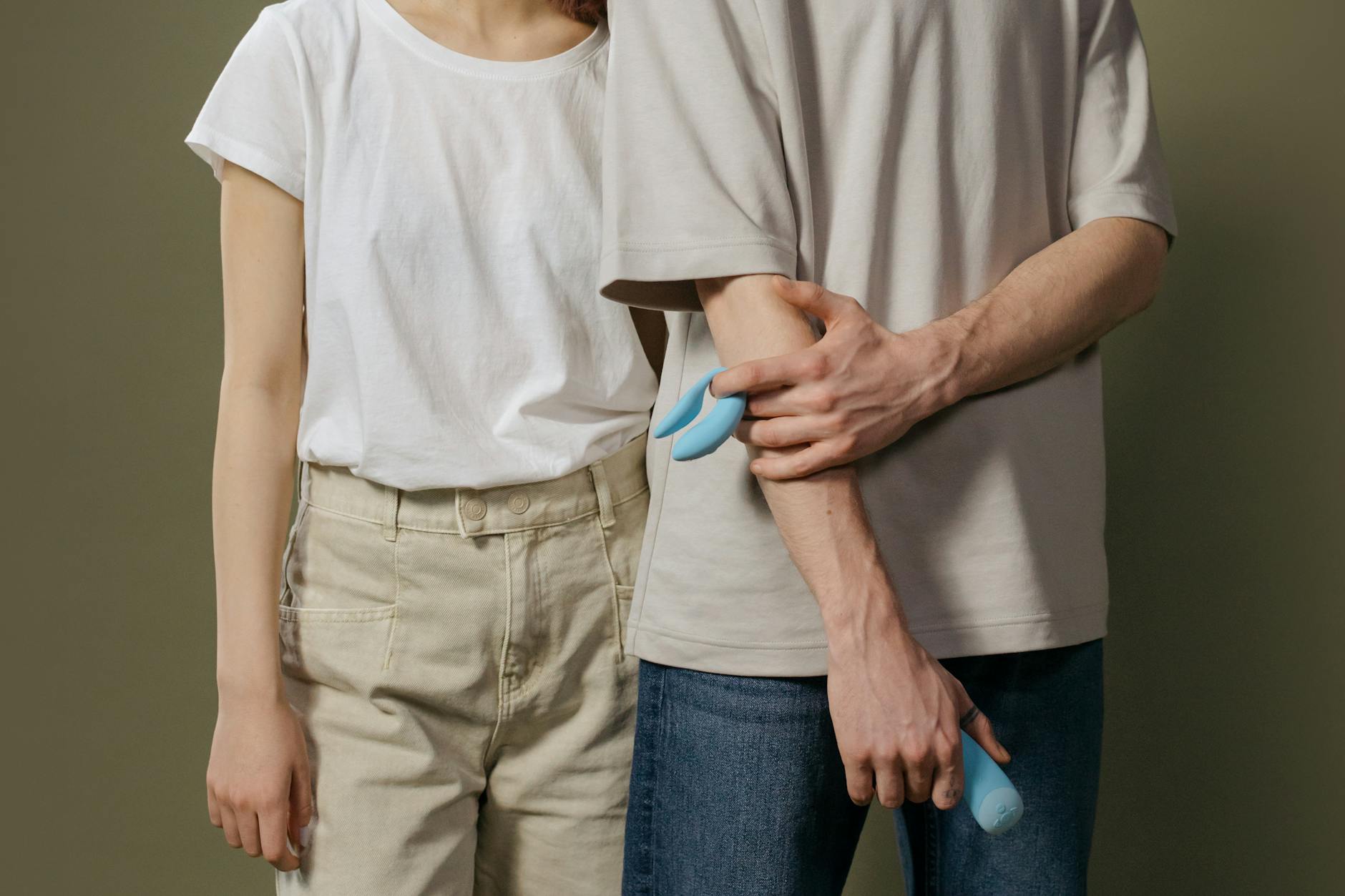
Here's the thing nobody tells you about pleasure after 40
Your body doesn't stop wanting pleasure in your 40s. It just starts wanting it differently. And that difference is worth understanding, because the shift often makes intimacy more intense, more focused, and honestly more satisfying than it was in your 20s or 30s.
I work with a lot of people navigating this transition, and the pattern is consistent: they assume something's broken. It's not. It's just recalibrated.
What actually changes in your nervous system after 40
The primary driver is hormonal. Estrogen levels begin to fluctuate in perimenopause (which can start in your 40s, sometimes even late 30s). This affects blood flow, tissue sensitivity, and how quickly arousal builds. Testosterone also shifts. These aren't tiny changes. They're significant enough that your body's response to direct stimulation genuinely feels different.
But here's what doesn't change: your clitoral nerve density, your brain's pleasure pathways, or your capacity for orgasm. The architecture of pleasure is still there. The wiring just works on a different electrical current.
Many of my clients report that their most powerful orgasms have happened after 40. This isn't poetic nonsense. This is measurable physiology meeting psychological freedom. You've spent two decades learning what you want. Your body is finally listening differently, which means you're often more aligned.
Why lemon vibrators feel so different now
Clitoral vibrators, especially lemon-shaped suction toys like the Lem vibrator, work through a specific mechanism: they create a gentle seal and pulse air pressure against the clitoris. This is different from direct friction vibration. And for bodies in perimenopause or menopause, this difference matters enormously.
Thinner tissue (which results from changing estrogen) is more sensitive to direct vibration. It can feel sharp, almost too much. Suction feels broader, more diffuse, less likely to create discomfort. A lemon vibrator's design also means there's no insertion involved unless you want it. It's purely external clitoral pleasure.
The shape itself is genius for this life stage. It's ergonomic enough to hold with your hand or use with a partner. The surface area distributes sensation evenly. You can adjust pressure by how firmly you press it against your body.
Arousal takes longer. That's actually good news.
In your 20s, arousal was fast. A thought, a touch, five minutes, and your body was ready. In your 40s, it takes 15 to 25 minutes to reach the same level of engorgement and lubrication. This feels slow. It feels like something's wrong. It's not.
Slower arousal means you build intensity gradually. It means your nervous system has time to fully engage. It means the orgasms that come from a lemon clitoral vibrator after 40 tend to have more texture to them. More variation. More layers.
Honestly, this reframing changed everything for my clients. Instead of treating the longer build-up as a problem, they started using it as foreplay architecture. What if you spent that 15 minutes doing exactly what you wanted, with a partner or alone, before even touching a vibrator? Orgasms that follow that kind of patience hit differently.
Lubrication and the Lem vibrator's design
Your body produces less natural lubrication after 40, especially in perimenopause. This is a fact. It's not optional. And it changes what toys feel good.
I always recommend a high-quality water-based lubricant with any vibrator, but it becomes essential here. A good lube doesn't just reduce friction. It creates a smoother sensation and lets the suction mechanism of a lemon vibrator work more effectively. The seal holds better. The pulse feels more consistent.
Some of my clients worry that needing lube feels like a failure. It's the opposite. It's information. Your body is telling you what it needs. A toy that works with that need, rather than against it, is a toy that serves you well.
Pelvic floor strength and tension shift too
Estrogen supports pelvic floor muscle tone. As estrogen drops, the muscles that support your pelvis and clitoris loosen slightly. You might notice that sensations feel less concentrated. Or you might find that your pelvic floor is actually more tense than it used to be, holding tension habitually.
Neither is wrong. Both respond to awareness. Pelvic floor physical therapy became popular for a reason. Even 5 minutes of deliberate relaxation and engagement practice before masturbation can change how a lemon clitoral vibrator feels. Some people benefit from kegel exercises. Others need the opposite: learning to fully relax.
A lemon vibrator's gentle approach is forgiving here. It doesn't demand anything from your pelvic floor. You set the pace and pressure.
Why suction toys outperform traditional vibration for many after 40
Traditional vibrators provide rapid oscillation. They're great. But for changing tissue sensitivity, they can feel intense or even painful. A lemon sucker toy uses air pulse technology, which is fundamentally different.
The Lem vibrator, for example, uses gentle waves of suction rather than buzzing. This stimulates the complex network of nerves around the clitoris without the mechanical harshness. For people dealing with vulvovaginal atrophy (the clinical name for thin tissue) or just changing sensation thresholds, suction often feels more pleasurable and less risky of discomfort.
You're not choosing between pleasure and comfort anymore. You're getting both.
Psychological shifts that make pleasure bigger, not smaller
Here's what rarely gets discussed: the mental landscape of pleasure shifts after 40, and it usually shifts in your favor.
In your 20s and 30s, you might have been performing pleasure. Trying to come quickly to match a partner's expectation. Worrying about how you looked. Managing someone else's needs. By 40, a lot of that noise is gone. You've usually figured out what actually feels good. You've stopped apologizing for your body. You know your worth.
This psychological shift is as important as the hormonal one. Many of my clients find that they're able to be present with sensation in a way they simply couldn't be before. That presence transforms the experience of a lemon vibrator from a tool you use to an experience you inhabit.
When to bring in professional support
If pleasure has become painful, see a gynecologist trained in perimenopause care. Genitourinary syndrome is real and very treatable. Usually it responds beautifully to topical estrogen therapy or other interventions.
If desire has vanished completely, that's also worth exploring with a specialist. Testosterone therapy exists. So does relationship counseling, which is often the real issue when desire suddenly disappears.
The point is: changes after 40 are normal. Pain and complete loss of interest are not. There's a difference, and it matters.
FAQ: Your Actual Questions About Lemon Vibrators After 40
Can I still use a clitoral vibrator at 45?
Absolutely. The clitoris doesn't retire. Your capacity for pleasure doesn't either. What might change is which type of vibrator feels best. If your usual vibrator suddenly feels too intense, a lemon vibrator's gentler suction approach often works beautifully. Think of it as upgrading your tools to match your body's current needs.
Do lemon vibrators feel the same as regular vibrators?
No. A lemon suction vibrator like the Lem uses air-pulse technology instead of buzzing vibration. The sensation is broader, more diffuse, less likely to feel sharp or uncomfortable on sensitive tissue. Many people report that lemon clitoral vibrators feel gentler and more sustainable than traditional vibes, especially after 40.
Will I need more time to reach orgasm with a suction toy?
Sometimes, sometimes not. It depends on your body and what you're used to. Many people find that suction actually builds orgasm faster because it stimulates a wider nerve network. The arousal you're already experiencing might progress more smoothly. The longer build-up you're noticing overall is mostly about your changing physiology, not about the toy itself.
Is it normal to need lubricant now when I didn't before?
Completely normal. Estrogen supports natural lubrication. As estrogen shifts, your body produces less. This isn't a personal failure. It's biology. A good water-based lube transforms how any vibrator feels and keeps sensation smooth and comfortable.
What if a lemon vibrator feels too intense?
Start at the lowest setting. Don't press too firmly. You control the pressure entirely. Lemon vibrators are also forgiving about timing. You can use it for 30 seconds, pause, use it again. There's no rule that says you have to build continuously to orgasm. Playing with on-and-off, different pressure levels, and different positions takes the pressure off and often leads to much stronger sensation.
Can I use a lemon clitoral vibrator with a partner?
Yes. A lemon vibrator's shape and size make it easy to use together. Some couples find that incorporating a suction toy deepens intimacy because it removes the pressure to "finish," and instead creates space for pleasure as an experience rather than a goal. That's especially valuable after 40, when the performance anxiety that might have existed earlier is usually gone anyway.
The real bottom line
Pleasure after 40 isn't less. It's different, and different often means better. Your body's response has shifted, but your capacity for sensation hasn't dimmed. Clitoral vibrators like a lemon sucker toy are designed to work with these shifts, not against them. You have better information about what feels good. You have fewer distractions. You have permission to prioritize yourself. That's the actual upgrade happening here.
If you're curious about trying a lemon vibrator or want to explore what tools might feel best for your changing body, that curiosity is worth honoring. Your pleasure matters now as much as it ever did. Sometimes more.