Let's talk about what really changes when you step away
You've been gone. Months. Maybe years. Maybe it was a relationship ending, a medical thing, exhaustion, grief, or just life getting too loud to hear yourself. Whatever the reason, you're thinking about coming back to pleasure, and something feels off already. Your body feels unfamiliar. Your interest feels fragile. The thought of trying feels both necessary and scary at the same time. That's not broken. That's actually completely normal.
Here's what's happening: your body hasn't forgotten how to feel pleasure, but the neural pathways that led you there have gone quiet. Think of it like a path through the woods. If no one walks it for a long time, grass grows over it. The path is still there. You just have to remember where to step.
Why sensation feels muted at first
When you haven't engaged with pleasure for a while, a few things happen simultaneously. Your clitoral tissue doesn't degenerate (that's not a thing that happens), but the nerve endings that fire up during arousal take time to wake up. They're not dead. They're dormant. There's a real difference.
Blood flow to the genitals also changes. When arousal isn't happening regularly, the tiny blood vessels that engorge during excitement aren't being exercised. Your nervous system, which regulates both arousal and relaxation, has gotten used to a different baseline. Your brain might also be running interference. If there's any shame, fear, or ambivalence tangled up in your break, your nervous system picks up on that and keeps you in a subtly protective state.
All of this means that when you come back, sensation can feel muted, numb, or just... less than you remember. That doesn't mean you're broken. It means you're reactivating.
How a lemon vibrator bridges the gap
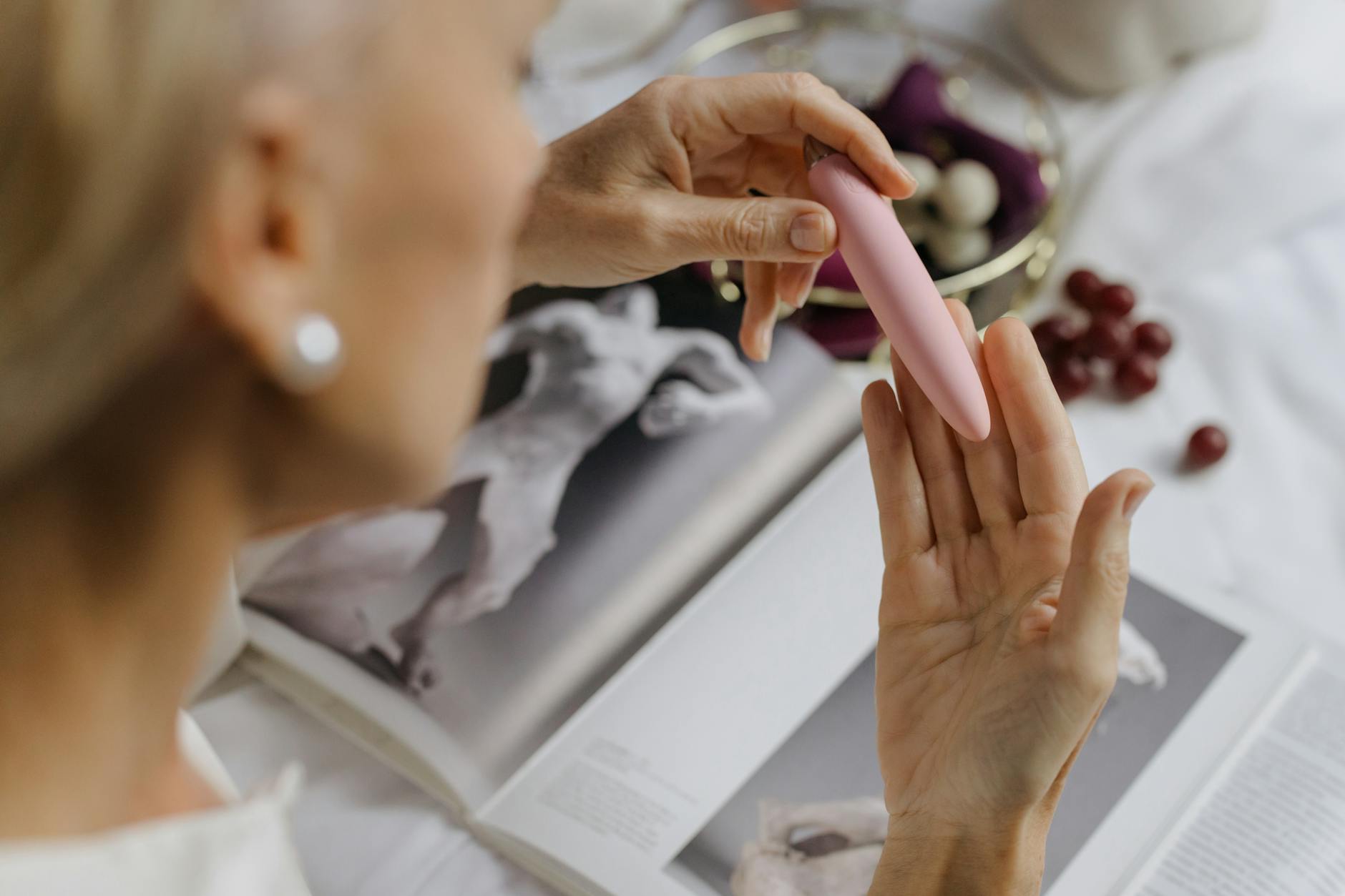
This is where tools matter. A lemon clitoral vibrator like the Nancy Lem works differently than fingers or partner touch because of one specific thing: suction stimulation. Instead of direct pressure or friction, suction engages the tissue in a way that's simultaneously gentler and more efficient at triggering nerve response.
When sensation is muted, you need a tool that doesn't require you to be already aroused to work. Direct vibration often demands that you're already somewhat excited before it feels good. Suction works differently. It wakes up the nerves directly, which then signals the rest of your body to pay attention. You're not forcing pleasure to happen. You're sending an invitational knock on the door.
For people restarting after a gap, this matters because it removes one layer of pressure. You don't have to get yourself worked up first. The vibrator does some of that work with you.
The three-phase restart pattern
If you're coming back after a long break, your nervous system benefits from a structured approach. Think of it as three phases.
Phase One: Exploration without expectation (Week 1-2). Use your lemon vibrator on the lowest setting. Don't aim for anything. Just notice. How does it feel on different parts of your vulva? Does intensity change how you respond? This phase is pure data collection. Your body is learning that pleasure is okay again, and your nervous system is downshifting from protection mode.
Phase Two: Building consistency (Week 3-4). Now that sensation is waking up, start using your vibrator 2-3 times a week at the same time of day if possible. Consistency matters because your nervous system learns through repetition. You're not trying to have an orgasm. You're trying to establish that this is safe, regular, and normal.
Phase Three: Pattern integration (Week 5+). By now, you've probably noticed which patterns feel best and which parts of your vulva are most responsive. You might be orgasming. You might not be yet. Both are fine. Now you're exploring what pleasure actually feels like when you're not chasing a destination.
The timeline varies wildly. Some people reactivate in two weeks. Others take two months. Your body's timeline is correct for your body.
Why your preferences might have shifted
Here's something that surprises people: you might come back and discover that what used to feel incredible now feels just okay. Or vice versa. The vibration pattern you loved five years ago might feel too intense now. The slow, gentle thing you never tried might suddenly be exactly what you need.
This isn't a sign that you've lost your sexuality. It's a sign that you've changed. Your nervous system has been through something. Your stress level might be different. Your body composition might be different. Your mental relationship to pleasure has definitely shifted. All of that is information, not damage.
If you have a partner and you're restarting together, this is one of the most important conversations to have. "What you remembered me liking might be different now" is not rejection. It's honesty. And honesty is the actual foundation of reconnection.
The role of patience (and why it's not passive)
Patience isn't about waiting and hoping things get better on their own. It's about showing up consistently without demanding results. If you're using your lemon vibrator three times a week for four weeks and you're not having orgasms, that's not failure. You're still in the reactivation phase.
Most people trying to restart make one of two mistakes. They either put massive pressure on themselves to prove they're "back to normal" (which creates the exact nervous system tension that blocks pleasure), or they give up after two weeks because it doesn't immediately feel like it used to (which just resets the clock). The middle path is showing up, noticing what's happening, and trusting that consistency creates change.

Photo by Ihsan Adityawarman on Pexels
Common blocks and how to move through them
Shame about the gap. If you're feeling ashamed that you've been away from pleasure, that's the first thing to address. Shame creates a subtle muscular tension that blocks sensation. One way through this is reframing the gap as rest, not failure. Your body needed that time. It wasn't wasted.
Grief or ambivalence. Sometimes the break came because a relationship ended or changed. Coming back to solo pleasure can feel lonely or complicated. That's real. It might help to do this work when you're already feeling reasonably okay about the breakup or change, rather than trying to use pleasure to feel better about it. Pleasure can be healing, but not when it's covering up grief that needs to be felt first.
Partner misalignment. If you're in a relationship and trying to restart, but your partner is pushing for "normal" before you're ready, that's a different conversation that has nothing to do with your vibrator. This might be a good time to read about how to use lemon vibrators to rebuild intimacy when you've drifted from your partner, because sometimes the tool is just the opening wedge for the actual conversation you both need.
Physical awkwardness. You might feel weird about your body, the way it looks, the way it responds. This is so common after a long gap. Your nervous system is picking up on your own ambivalence about your body, and that subtly prevents relaxation. Sometimes working with a partner (whether that's a therapist, a trusted friend, or a partner you're vulnerable with) on body acceptance makes the physical part easier.
When to speed up and when to slow down
If you're two weeks in and you're noticing increased sensation, more regular arousal, or the beginning of orgasms, you can gradually increase intensity or pattern variety. You don't have to stay at level one forever. Your reactivation is actually working.
If you're three weeks in and sensation still feels muted, or you're noticing increased pain or frustration, slow down. Go back to phase one. Use lower settings. Add more time between sessions. Sometimes your nervous system just needs more runway.
There's no medal for restarting quickly. There's only the actual experience of pleasure returning in a way that feels real to you.
FAQ
How long does it actually take to regain sensation after a long break from sexual activity?
Most people notice measurable changes within 3-4 weeks of consistent use. Full reactivation (where pleasure feels as fluid and varied as it used to) often takes 2-3 months. But "normal" is individual. Some people feel reconnected in weeks. Others need longer. There's no standard timeline, and comparing yourself to someone else's reactivation is not useful.
Can using a lemon vibrator make sensation come back faster?
Yes, but not because it's magic. A lemon clitoral vibrator specifically works efficiently because suction stimulation engages nerve endings more directly than other kinds of touch. This means you get measurable nervous system response even when sensation feels muted. That feedback loop (stimulation creating sensation, sensation creating arousal, arousal creating more sensation) accelerates reactivation when it's done consistently.
Is it normal to need different vibrator settings or patterns than before the break?
Completely normal. Your nervous system baseline has shifted. Your body composition might have changed. Your stress level is different. All of that affects what feels good. Many people find that after a long break, they prefer slower patterns initially, then gradually move toward faster or more intense settings as sensation returns. Trust what actually feels good now, not what you think should feel good based on your past.
What if my partner wants to help, but I'm not sure I'm ready to be sexual together yet?
That's an important distinction. Reactivating solo (with a lemon vibrator) is different from reactivating with a partner. Solo exploration is about you learning your own nervous system again. Partnered pleasure adds another person's energy and expectations into the mix. It's absolutely okay to do solo reactivation first, then bring your partner in once you're feeling more connected to your own body. You might also read about why lemon clitoral vibrators work better for couples navigating slower arousal together for more specific partnership dynamics.
Can anxiety or overthinking actually prevent sensation from coming back?
Yes. Your nervous system can't simultaneously be in protection mode and pleasure mode. If you're thinking "this should feel better by now" or "what's wrong with me," your body is getting mixed signals. Some people find it helpful to set a timer (say, 10 minutes) and give themselves permission to just notice whatever happens, without judgment. Others do better with some breathing or grounding before using their vibrator. Experiment with what quiets your brain first.
Is there a difference between using a lemon vibrator solo versus with a partner during a restart?
Yes. Solo use lets you focus entirely on your own sensations without performing or managing someone else's experience. It's often easier to relax. With a partner, you're also managing their presence, their touch, their pace. Both are valuable, but solo reactivation first usually means you come to partnered pleasure from a place of more confidence and sensation. If you do want to include a partner, consider starting with them present but uninvolved, so they understand the process, then gradually building in touch once you're reconnected to your own body.
You're not starting over. You're remembering.
When pleasure has been quiet for a while, the work of reactivation can feel like you're building something from nothing. You're not. You're waking something up that's still there, even if it's dormant. Your nerve endings are still intact. Your capacity for arousal is still intact. Your ability to feel good in your body is still intact.
A lemon vibrator is just a tool that makes the waking up part more efficient. What you're really doing is telling your body that it's safe to feel again. That takes time, consistency, and patience. But it happens. And when it does, you often find that you're not coming back to exactly the same pleasure you left. You're arriving at something new.
If you're working through this with a partner or if you're navigating other relationship dynamics around your restart, reach out. We're here to help you think through what reconnection actually means for you.
Sources
This article draws on clinical evidence from the Gottman Institute regarding nervous system activation and relationship patterns, along with neurological research on sensory reactivation in adults. For personalized guidance on your unique situation, consider speaking with a relationship specialist or therapist who understands pleasure as part of whole-body wellbeing.