Let's name what's actually happening
Your desire didn't vanish because you stopped loving your partner. It vanished because your nervous system is processing three simultaneous identity shifts and your brain has zero bandwidth left for pleasure. That's not a relationship problem. That's a human problem.
Midlife transitions are notorious desire-killers. The empty nest arrives. A promotion lands. A parent gets sick. You're suddenly 47 and nothing feels the way it did at 37. Your partner notices. You notice them noticing. And then desire becomes another thing you're failing at, which tanks it further.
Here's what I see in my practice: when people rebuild pleasure after major life changes, they almost always start by treating desire like a switch they forgot to flip. But desire isn't a switch. It's a signal. And the signal is usually saying something true about what you need.
Why midlife transitions nuke libido specifically
Three neurological layers are happening at once.
First, the attention problem. Your prefrontal cortex, the part that processes pleasure and connection, is fully booked processing change. Grief over your kids leaving. Stress about new responsibilities. Uncertainty about identity when the role you've played for decades suddenly shifts. Your brain physically cannot allocate resources to arousal when it's running a continuous threat-detection loop.
Second, the nervous system problem. Major transitions keep your body in low-level activation. You're not panicking, but you're not relaxed either. You're in a chronic "watching for the next problem" state. Sexual arousal requires the opposite. It requires your nervous system to genuinely believe you're safe enough to be vulnerable.
Third, the meaning problem. Sex becomes loaded. It used to be a place where you felt connected, or at least where you stopped thinking. Now it feels like an obligation you're failing at. Or it feels like a conversation about your relationship that neither of you wants to have. Or it feels like admitting that you're grieving while your partner is fine.
When any of those three layers is jammed, desire doesn't come back on its own.
The permission you actually need (not the permission you think)
Most people assume they need permission to want pleasure again. Permission from their partner. Permission from the part of themselves that's exhausted. Permission from the timeline they thought they'd be on by now.
You don't need any of that. You need something much simpler: the acknowledgment that rebuilding desire is a skill, not a feeling. You can't think your way into arousal. But you can structure your nervous system to make arousal possible.
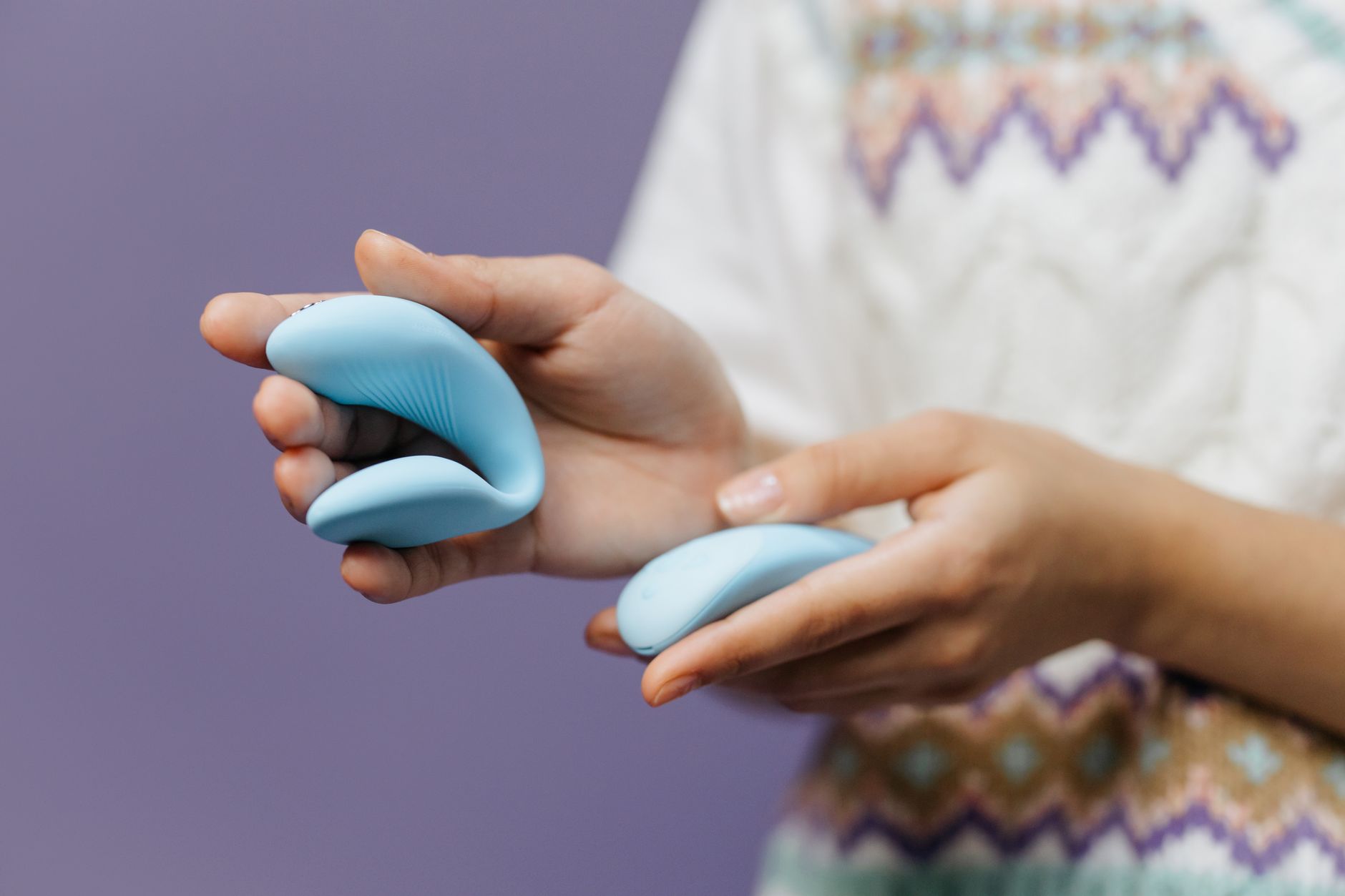
That's where lemon clitoral vibrators enter. Not as a magic fix, but as a physical anchor. A way to tell your body "this is a moment where we're prioritizing sensation over productivity."
How clitoral stimulation actually restarts the nervous system
When you've been running on empty for months, direct clitoral stimulation works faster than anything else because it bypasses the permission-seeking part of your brain entirely.
A lemon vibrator delivers focused, consistent sensation to one of the most sensitive areas of your body. That sensation creates a signal that your nervous system recognizes immediately: "this is safe, this feels good, pay attention." You're not trying to feel aroused. You're literally training your nervous system back to baseline sensitivity.
Start with the lowest settings on a lemon sucker vibrator. Let your body just receive. Ten minutes. That's it. No performance pressure. No expectation of orgasm. Just sensation.
What usually happens over three to four sessions is that your body remembers it can feel good about something that isn't productive or urgent or tied to your identity crisis. That tiny permission ripples outward.
The practical rebuild sequence
I recommend this progression with a lemon vibrator when you're coming back from a major transition.
Week 1-2: Solo sensation work. Fifteen minutes in the morning or afternoon (not the desperate end of the day when you're already depleted). Lowest setting. No goal. If nothing happens, that's fine. You're just reacquainting your nervous system with pleasure.
Week 3-4: Notice what changes. Does your mood shift? Do you sleep differently? Does something in your chest loosen? Sometimes desire doesn't come back to sex first. Sometimes it comes back as feeling more present with your partner, or more patient, or less rageful about small things.
Week 5-6: Introduce your partner (or don't, depending on your situation). If you're partnered, you might show them what you've discovered. Not as "let's have sex" but as "this is helping me feel like myself again." A lot of partners find this incredibly hot because they've been watching you suffer and suddenly you're taking yourself seriously.
Beyond six weeks: Notice what you actually want. Sometimes people rebuilding desire after major transitions realize they want something different than what they had before. A new pace. Different kind of touch. Less frequency but more intentionality. Let that emerge.
The conversation with your partner (if you're not going solo)
If you're partnered, this is the part where most couples get stuck.
Your partner has been noticing your absence too. They've probably been interpreting it as rejection. And you've been interpreting their noticing as pressure. So the topic of desire becomes toxic before you even touch it.
Start with something radically honest: "I'm not going to try to want you on a timeline. I'm going to rebuild my relationship with pleasure on my own first, and that might take a few months, and then we'll see what my body actually wants." Most partners will take that truth over the performance of false desire.
Then actually do it. Use a lemon vibrator solo for the time frame above. Report back. Let your partner know what's shifting in your nervous system, not what's shifting in your sexual desire. Those are different conversations.
When desire doesn't come back the way it was
Sometimes, after a major life transition, your sexuality genuinely doesn't go back to where it was. Your mid-40s brain is different from your mid-30s brain. Your body is different. Your priorities have shifted. That's not failure. That's development.
When people rebuild desire after midlife transitions, I often see them land in a place that's more intentional, less reactive. Sex becomes something they choose, not something that happens to them on the old rhythm. Some people like that better. Some mourn the ease of the before.
Both are valid. The clitoral vibrators at Hell A Nancy's, like the lem, are useful at any of these landing points. Whether you're rebuilding baseline sensation, exploring solo pleasure for the first time in a decade, or figuring out a new kind of partnership, they're tools that work with your nervous system, not against it.
One more thing: grief and pleasure can coexist
You don't have to be done grieving your identity shift to start feeling pleasure again. You don't have to have it all figured out before your body gets to feel good.
In fact, pleasure often comes back fastest when you stop requiring yourself to be done processing first. Sensation and grief are separate systems. You can feel both.
When you're using a lemon vibrator during a major life transition, you're not forcing yourself out of your feelings. You're just giving your nervous system permission to feel something good alongside everything hard. That's all pleasure needs to come back. Not a solved problem. Just permission to exist while the problem's still processing.
People also ask
How long does it usually take for desire to come back after a major life change?
It depends on the transition and your baseline, but I typically see desire starting to rebuild within four to six weeks of consistent solo pleasure practice. The key word is consistent. Two minutes once a week won't do it. Fifteen minutes, three to four times weekly, signals to your nervous system that this matters. Some people feel shifts in two weeks. Others take three months. Both are normal. What matters is that you're rebuilding from the inside out, not waiting for external permission.
Can using a clitoral vibrator like a lemon sucker make partnered sex feel less important?
The opposite usually happens. When people rebuild solo pleasure first, partnered sex often becomes more intentional and connected, not less. You're no longer doing it out of obligation or to fix the relationship. You're doing it because your body genuinely wants it. Partners notice that immediately. The pressure lifts for everyone.
Is it normal to feel disconnected from pleasure when you're grieving identity changes?
Completely normal. Grief and major transitions keep your nervous system in a protective state. Your body isn't broken. It's doing exactly what it's supposed to do: conserving resources for survival. Using a lemon vibrator is a gentle way of telling your body "we're safe now, you can soften." It works because it doesn't require you to think or feel a certain way first. It just gives sensation.
What if my partner isn't supportive of me using toys during this transition?
That's worth exploring separately from the toy itself. Often, partner resistance to vibrators stems from the same insecurity that's blocking desire: "Does this mean they don't want me?" A good conversation starts with reassurance. "This helps me feel like myself. It makes me more available to you, not less." If the resistance persists after honest conversation, that might point to a relationship issue that goes beyond desire and into fundamental compatibility or communication patterns.
Should I use a lemon vibrator before or after talking with my partner about the desire drop?
Before. Give yourself permission to rebuild sensation first. Then, when you can report back with something concrete ("my nervous system is calming down" or "I feel more present"), the conversation with your partner becomes less fraught. You're not coming to them with a problem. You're coming with a solution you've already started.
Can midlife transitions affect desire differently for people of different genders or relationship structures?
Yes. Women in heterosexual partnerships often experience the empty nest as a loss of identity, which tanks desire. Men sometimes experience it as relief or as a second act beginning. In same-sex partnerships, the patterns look different. In solo relationships, the transition might be about reconnecting with pleasure for its own sake, not within the relational context. The core mechanism is the same though: your nervous system needs to reset. A clitoral vibrator works regardless of the structure or gender. What changes is the conversation you have with your partner, if you have one.
Sources and further reading
Bessel van der Kolk. The Body Keeps the Score: Brain, Mind, and Body in the Healing of Trauma. Penguin, 2014.
Harville Hendrix. Getting the Love You Want: A Guide for Couples. Revised Edition. Holt, 2019.
Esther Perel. The State of Affairs: Rethinking Infidelity. HarperCollins, 2018.
Steven Pinker. How the Mind Works. W.W. Norton & Company, 1997.
Emily Nagoski. Come As You Are: The Surprising New Science That Will Transform Your Sex Life. Simon & Schuster, 2015.