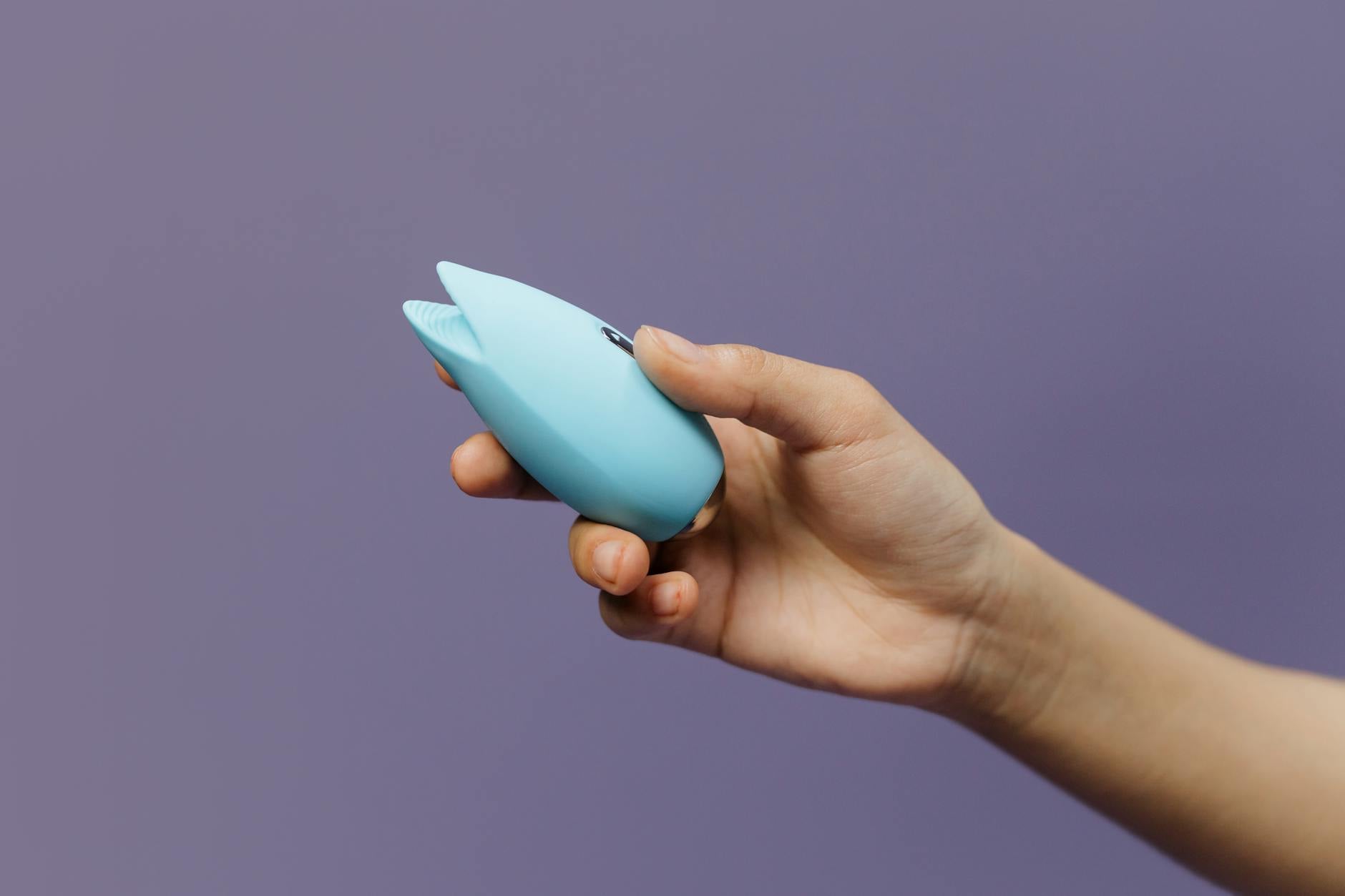
Here's what happens when your partner is afraid of hurting you
The anxiety often starts quietly. Maybe you mentioned discomfort once. Maybe they've read something online. Maybe they just sense tightness and their brain goes straight to "I might be causing harm." From there, it's a spiral: they pull back, you feel rejected, sex becomes less frequent, both of you tense up even more. The irony is that the anxiety itself is the problem.
Your partner's protectiveness is coming from the right place. That doesn't make it less isolating.
Why this matters (and why a lemon vibrator changes the dynamic)
When a partner is worried about causing pain, they're often hesitating at exactly the moments when you need them to be present. They're managing their anxiety instead of managing pleasure. A lemon clitoral vibrator transfers agency back to you. It's not a replacement for them. It's a tool that says, "I'm in control here. You can watch. You can participate. You don't have to carry all the responsibility for my sensation."
This shift is enormous for anxious partners. Suddenly, they can see that you're having genuine pleasure without them needing to "do" anything that might hurt you. They get to witness your body responding without the weight of being the sole source of stimulation. And for you, you get to explore pleasure on your own terms while they're present and engaged.
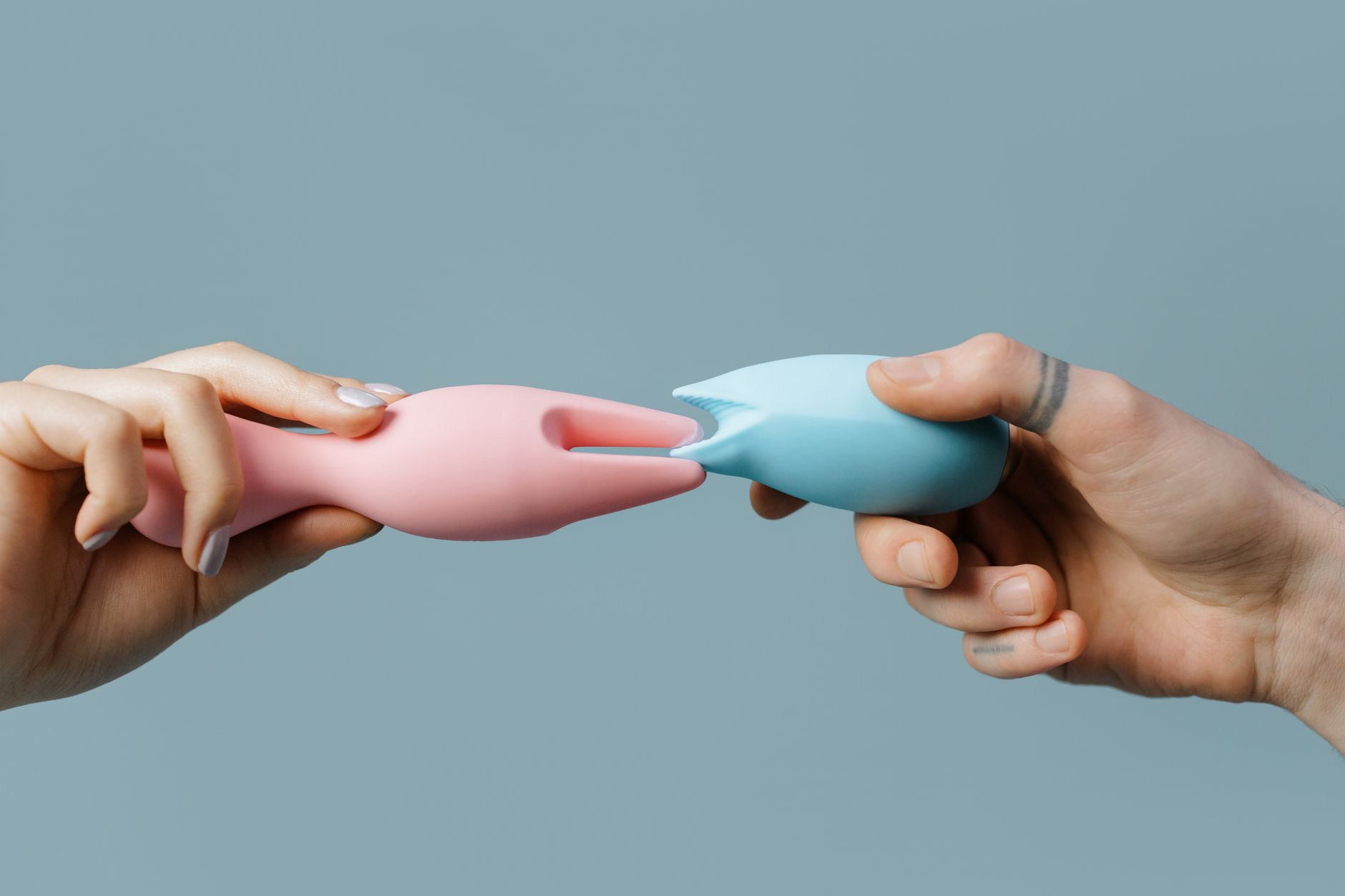
Photo by cottonbro studio on Pexels
The conversation before you start
Don't wait until you're in bed to introduce a lemon clitoral vibrator. Have this talk clothed, in daylight, with tea or coffee nearby. Make it practical, not seductive.
Start here: "I want to explore pleasure in a way that feels safer for both of us. I've been thinking about using a vibrator, and I want you to understand why. It's not because anything you're doing is wrong. It's because I want to show you that I can guide my own pleasure, and you can trust that I'll tell you if anything actually hurts."
Then be specific about what you want him to do. "I'd like you to be there. You could touch me elsewhere. You could just watch. You could ask me questions about what feels good." Give him a role that isn't "figure out how not to hurt me."
If he pushes back or seems resistant, that's actually useful information. It might mean his anxiety is deeper than surface-level worry. In that case, consider whether a couples session with a therapist makes sense. Sometimes a professional mediator helps anxious partners hear that you're not rejecting them.
How to use a lemon vibrator in this specific context
Start solo first. I know that seems counterintuitive, but your partner needs to see you relaxed and confident with the device before they use it with you. Spend a few sessions alone, get familiar with the settings on your Lem or Lolly, notice what patterns feel good. This also takes the pressure off your first experience together.
When you're ready to bring him into it, go slow. Let him watch you use it. Then hand it to him and show him where you want the stimulation. With a lemon clitoral vibrator, the suction mechanism is gentle compared to traditional vibration, which often helps anxious partners feel less worried. There's something about the design that reads as "safe" to people who are scared of causing pain.
Start at the lowest setting. The Lem or similar lemon adult toys typically have 3-5 intensity levels. Spend most of your time at level 1 or 2. This is partly about building sensation gradually, but it's also about proving to your partner that you're comfortable and in control.
Managing his anxiety in real time
Here's the thing: even with clear communication, some partners will still catastrophize. "Is this okay?" "Does this hurt?" "Are you sure?" If this becomes a pattern, you need to name it gently.
Try: "Right now, the most helpful thing you can do is stop asking and just listen to my body. If I need you to pause, I'll tell you. If I'm moaning, that's a good sign. Checking in every ten seconds is actually making it harder for me to focus." Some people respond better to concrete instruction than reassurance.
If he's still spiraling, that's a sign his anxiety is about something beyond your physical comfort. He might be processing shame, or past experience, or something else entirely. Sex is rarely just about sex in these situations.
The pleasure payoff
Once you get past the anxiety loop, something shifts. Your partner gets to see you orgasm with zero ambiguity. There's no guesswork. There's no room for him to wonder if you're faking it or tolerating it. You're using a lemon clitoral vibrator, your body is responding, and he's present for it.
Many couples find this actually rebuilds intimacy faster than traditional sex because there's so much less performance anxiety on both sides. He's not managing his worry. You're not managing whether he's worried. You're just there together, and pleasure is happening.
Common hiccups and how to move past them
Sometimes a partner will feel emasculated by a vibrator. This is actually about his insecurity, not about you or the device. The best response is compassion paired with boundaries. "Your pleasure matters to me, and so does mine. A vibrator isn't replacing you. It's expanding what we can do together." If he needs more reassurance than that, that's something to work through with a therapist, not negotiate away with your body.
Other times, an anxious partner will swing the opposite direction and become overly focused on the vibrator. "Use it more," "Do that again," "Go faster." That can flip the dynamic from him being too withdrawn to him being controlling in a different way. Catch this early. Your pleasure is collaborative, not a performance.
Sometimes he'll want to use it on you and get frustrated if he doesn't see immediate results. Remind him that lemon vibrators work best with patience, arousal, and time. You can't rush sensation. This is actually a gift because it forces him to slow down and be present instead of outcome-focused.
When to bring in outside support
If your partner's anxiety about hurting you is preventing sex altogether, or if it's rooted in past trauma or deep shame, a sex-positive therapist can help enormously. This isn't a failure. It's smart. Someone trained in both trauma and sexuality can help him untangle what's really driving the fear.
You might also find that as you use a lemon vibrator together and he realizes you're genuinely okay and genuinely having pleasure, his anxiety naturally decreases. Sometimes people just need evidence. Sometimes that evidence comes from watching you come with a clitoral vibrator in the room.
The bigger picture
Rebuilding confidence after fear is present in a relationship is slower work than just having good sex. But it's deeper, too. When your partner learns to trust your body's signals and your own ability to communicate what you need, that trust extends beyond the bedroom. You start to actually believe each other. That changes everything.
Your lemon vibrator isn't a band-aid. It's a tool for translation. It lets your body say, "I'm okay, I'm enjoying this, I'm in control," in a way that sometimes words can't. And for an anxious partner, seeing is believing.
People also ask
Can using a vibrator while my partner watches actually help his anxiety?
Yes, but only if the foundation is there. If you're introducing it as a solution to avoid him altogether, it'll backfire. But if you're using it as a way to show him that you're capable of pleasure and guiding your own experience, most anxious partners find it genuinely reassuring. They see your genuine arousal and genuine pleasure with zero ambiguity. That's powerful evidence that you're okay.
What if my partner refuses to watch or participate when I use a lemon vibrator?
That's worth exploring. Is he uncomfortable with sex toys in general? Is it shame? Is it that he needs more time? You can't force someone to participate, but you can be clear: "I'm going to use this tool for my own pleasure. You're welcome to be present or not, but I need you to accept that this is something I'm doing for myself." If he's unwilling to accept your autonomy around your own body, that's a bigger relationship issue than the vibrator itself.
Do I need to buy an expensive lemon clitoral vibrator, or will any vibrator work?
A lemon clitoral vibrator specifically works well in this context because the suction mechanism feels less intense and more controlled than traditional vibration. It's also quieter and less clinical-looking, which helps partners feel less intimidated. That said, the device matters less than the communication around using it. If you already have a vibrator you like, start there. If you're buying new, something like the Lem or a similar lemon adult toy is a good investment because it's designed with couples in mind.
How long before we can go back to regular sex after introducing a vibrator?
This isn't linear. You might use a vibrator one night and have traditional penetrative sex the next night, and both are great. Or you might find you prefer using a vibrator for clitoral stimulation and him for penetration. The goal isn't to "get back" to how things were. It's to expand what's available to you. Let your actual pleasure and comfort guide the timeline, not some imaginary "normal."
What if the vibrator makes things better but his anxiety creeps back in later?
Anxiety isn't fixed in one conversation or one good experience. It might resurface, especially if there's stress elsewhere in your life or relationship. When it does, you can return to the same conversation. "Remember when I used the vibrator and we both felt connected? Let's do that again." You're not starting from zero. You have evidence that this works.
Can we use a lemon vibrator if I actually do have pain during sex?
Absolutely, but with nuance. If you have genuine pain, a vibrator is a tool for exploring sensation, not ignoring the pain. You still need to see a doctor to rule out anything medical. But once you've done that, a lemon clitoral vibrator can help because it gives you agency to explore what actually feels good versus what hurts. Your partner can learn your real boundaries by watching and listening, not by guessing.