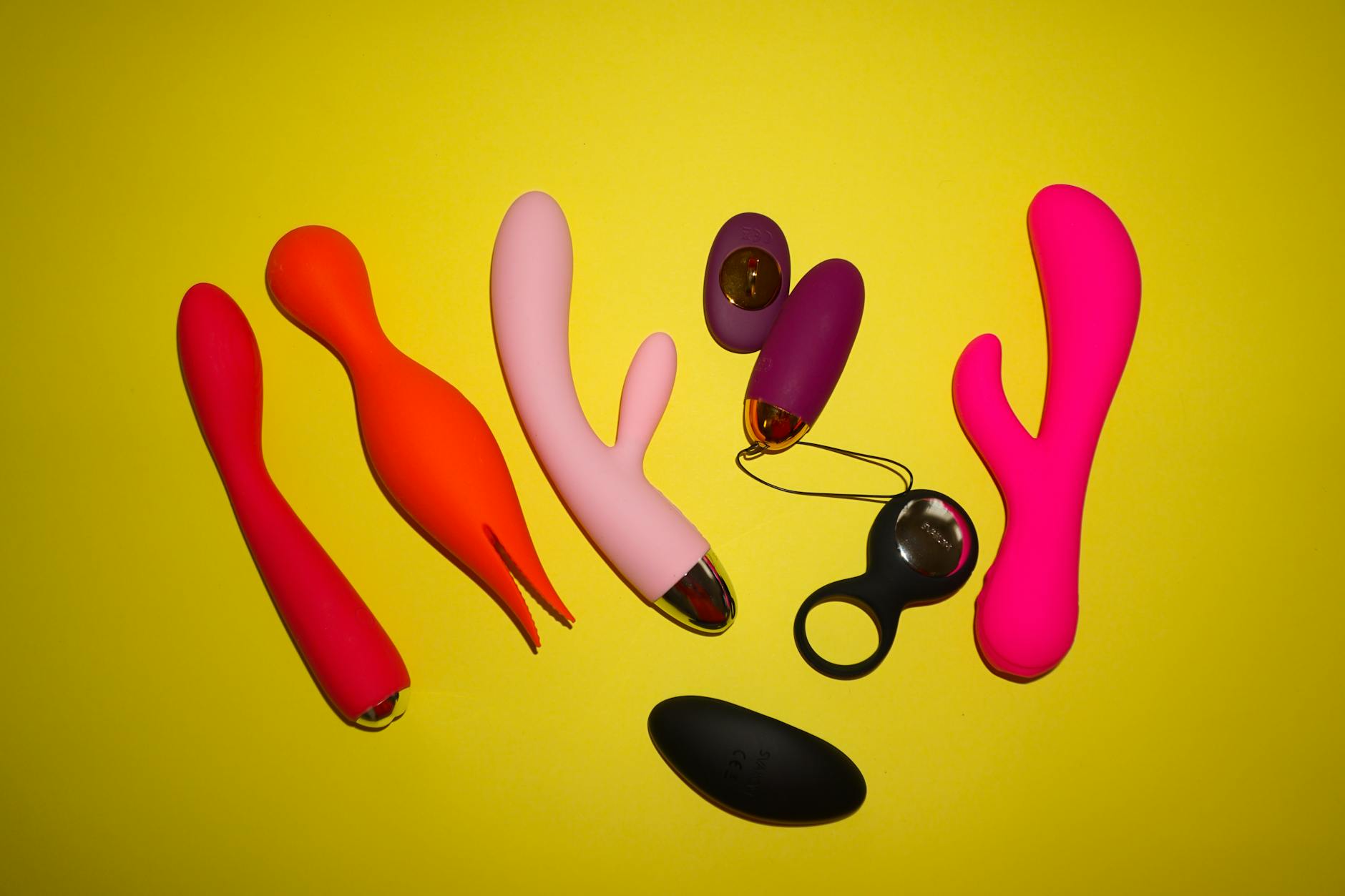
How to Use Lemon Vibrators When You Feel Self-Conscious About Pleasure
Let's be real. Self-consciousness is the fastest pleasure killer out there. It doesn't matter how good a vibrator is if your brain is locked in a loop of "Is this weird?" or "Should I be doing this?" or "What if someone finds out?" Those thoughts will drown out every physical sensation.
I've worked with countless clients who have everything they need for amazing pleasure except one thing: permission. Not permission from anyone else. Permission from themselves.
Lemon vibrators work particularly well for people working through self-consciousness because the design itself sends a quiet message. It looks nothing like traditional sex toys. It doesn't perform, it doesn't intimidate, it's just there. Simple, friendly, unassuming. For people carrying shame around pleasure, that can be the difference between using it and letting it sit in a drawer.
But the vibrator is only the starting point. The real work is rewiring how you think about your own pleasure.
The neuroscience of shame and numbness
When you feel self-conscious, your nervous system triggers a specific response. Your body tenses, your breathing shallows, and your awareness narrows. This isn't a personality flaw. It's your threat-detection system working overtime. Your brain has learned that pleasure equals danger (judgment, exposure, sin, unfemininity, you name it), so it shuts sensation down as a protective measure.
Over time, this becomes automatic. You don't consciously think "I should tense up." You just notice that pleasure feels muted. Orgasms feel distant. Arousal takes forever. And the longer this goes on, the more self-conscious you become, creating a feedback loop.
The good news: this is trainable. You can teach your nervous system that your pleasure is safe. And lemon vibrators can be part of that retraining because they're low-stakes enough to help you practice.
Start in private, with zero pressure
This sounds obvious, but most people skip this step. They think they should be able to use a vibrator while also managing partner presence, time limits, or performance anxiety. You can't.
Your first few sessions with a lemon clitoral vibrator should be alone, no time limit, and with absolutely zero goal. Not "I need to have an orgasm." Not "I need to prove this works." Just exploration.
Set maybe 20 minutes. Turn off your phone. Don't have music playing if it feels performative. Just you and the vibrator, no expectations.
Start with the lowest setting. Let it run for 30 seconds, then stop. Notice what you feel. Not whether it feels good. Just whether you feel anything at all. That awareness itself is the victory early on.
Many people with deep self-consciousness report that their first sessions with a lemon vibrator feel almost... neutral. Not bad, just flat. That's not a failure. That's your nervous system testing whether it's actually safe. Keep going.
The role of breathwork (this matters more than you think)
Self-consciousness lives in tension. When you tense, you block sensation. Breathing interrupts that cycle because you can't breathe deeply while staying defended.
Before you even turn on the vibrator, spend two minutes doing something I call "settling breathing." Slow, deep inhales through your nose (count of 4), hold for 2, exhale through your mouth for a count of 5. Just three or four rounds.
This tells your nervous system that the environment is safe. It's not a spiritual thing. It's literally just signaling to your threat-detection system: we're not in danger right now.
During the session, if you notice yourself holding tension in your chest or shoulders, that's your cue to breathe again. Not to push through. To pause, breathe, reset.
Most people find that the combination of a lemon vibrator's consistent, non-aggressive stimulation plus breath awareness creates a kind of protective container for pleasure. You're not fending off judgment or forcing an orgasm. You're just... allowing sensation.
The mental redirect
This is the part that separates a vibrator that sits unused from one that actually works: catching the self-critical thoughts and actually redirecting them.
You'll notice it happening. "This is silly." "I'm taking too long." "My body's doing something weird." "What would people think." Those thoughts are normal. The question is what you do with them.
Here's the move: acknowledge the thought, then gently redirect to sensation. "I'm noticing I think this is silly." Then: "What do I actually feel right now, in my body?" Not to suppress the thought, but to interrupt the loop by bringing attention back to your actual experience instead of your judgment about it.
Over time, this rewires your attention. Your brain starts to trust that pleasure is worth paying attention to. It's not frivolous or dangerous. It's just... something you feel.
How to use lemon vibrators without performance pressure
Here's what makes lemon clitoral vibrators different for people with self-consciousness: they don't require a particular kind of body or response. There's no "right" way to use one. There's no performance dimension.
Start by exploring the patterns on the lowest settings. A lemon sucker creates suction rather than vibration, which many people find gentler and less intimidating than traditional vibration. Let it run against different areas of your vulva for 15-20 seconds, then move to a different spot.
The goal is mapping. Where do you feel sensation most easily? What pattern feels most neutral? (Neutral is often the entry point for people moving past self-consciousness.)
If you feel an orgasm building, great. If you don't, that's also fine. Actually, for people rewiring their relationship with pleasure, "not orgasming" for the first few sessions can be valuable because it removes the last possible performance metric.
Many people find that once the pressure to orgasm drops away, pleasure itself shows up. Weird how that works.
When you're ready: reintroducing pleasure to your mind
After a few solo sessions, you'll probably notice something has shifted. Maybe sensations are clearer. Maybe you feel less tense. Maybe you're not as judgy about yourself.
That's when you can start letting your mind engage, not just your body. Not by forcing fantasies or performing pleasure, but by actually noticing what you like.
During a session, try naming one thing as you're feeling it. "I like how this feels on the left side." "This pattern is nice." Not to narrate it like you're in a film. Just to reinforce to yourself: I like this. My pleasure matters.
This is the beginning of building pleasure self-trust. That's the real antidote to self-consciousness.
When introducing a partner (if that's the plan)
If you're planning to eventually use a lemon vibrator with a partner, the fact that you've spent time with it alone is crucial. You've already built a relationship with it. You know what it feels like. You've practiced the breathwork and the thought redirection.
When your partner is present, that experience is your anchor. You already know this is yours. This is about your pleasure, not his, not theirs. The vibrator is a tool for what you like, not a request he has to fulfill or a proof that something's wrong.
The introduction conversation might sound like: "I've been experimenting with something that helps me feel more sensation. I'd like to use it when we're together, but I want to be clear that this is for me and my pleasure." Clear. Simple. Not apologetic.
Most partners who care about you will find that straightforward statement really clear to work with.
The timeline for rebuilding pleasure confidence
There's no fixed schedule, but I usually tell people: give yourself at least four to six weeks of regular solo sessions before you even think about integrating a vibrator with a partner.
Your nervous system needs time to learn that pleasure is safe. That can't be rushed. But it also doesn't require perfection. Missing a week is fine. Having a session that feels flat is fine. Progress isn't linear.
What matters is consistency and patience with yourself. Every time you notice self-consciousness and choose to breathe and redirect instead of shutting down, you're rewiring your nervous system. That's real change.
After six weeks of regular use, most people report that they feel noticeably less self-conscious about their own pleasure, even outside of using a vibrator. The confidence carries over.
Common hiccups (and what they actually mean)
"I can't turn it on without feeling embarrassed." That's your nervous system still signaling danger. Try this: turn it on while you're fully clothed, in your regular environment. Let it run for 30 seconds. That's all. You're teaching your system that the object itself is safe.
"I use it but I don't feel anything." Numbness is real, and it's often deeper than just self-consciousness. It might be medication, stress, or accumulated tension. That's not a vibrator problem. It might be worth talking to a therapist or doctor, because you deserve to know whether this is situational or something bigger.
"I feel guilty after using it." That guilt is the residue of old messaging about what your pleasure "should" be. It doesn't mean you shouldn't use the vibrator. It means you're already in the process of changing your beliefs about yourself. Guilt is sometimes part of that process.
"I'm worried my partner will judge me." If your partner would judge you for your own pleasure, that's information about the relationship, not about you. Your pleasure isn't shameful. Ever.
The bigger picture
Self-consciousness about pleasure often comes from somewhere. Religious upbringing, messages about femininity, past partners, trauma, societal noise about what "normal" sexuality looks like. A lemon vibrator can't fix those sources.
But it can help you practice feeling safe in your own pleasure right now. And that practice, repeated over weeks, actually changes your nervous system's response. It's not magic. It's neuroscience.
You might find that as your confidence in your own pleasure grows, other things shift too. You might speak up more in relationships. You might feel more at home in your body. You might realize that what you thought was broken was just defended.
That's what I see happen when people stop fighting their own desire and actually start listening to it.
FAQ: Self-Consciousness and Lemon Vibrators
How long does it take to feel less self-conscious about using a vibrator?
Most people notice a shift in 3 to 4 weeks of regular use, but "shift" doesn't mean everything disappears. It usually feels like the self-conscious thoughts are quieter in the background rather than screaming in the foreground. By 8 to 12 weeks, many report that the self-consciousness has mostly lifted. Everyone's timeline is different depending on how deep the shame patterns go.
Is it normal to feel nothing the first time I use a lemon clitoral vibrator?
Completely normal. When your nervous system is in protective mode, sensation gets muted as part of the defense mechanism. You might feel physical sensation (vibration) without feeling pleasure. That's not a sign the vibrator doesn't work or that something's wrong with you. It means your system is testing whether it's safe to feel. Keep going.
Can I use a lemon vibrator if I'm worried about my partner finding out?
Privacy is reasonable, but the worry itself is worth exploring. If you feel you need to hide something that brings you pleasure, that's worth examining. Either with a therapist or, eventually, with your partner. That said, you're entitled to solo pleasure and solo privacy. A small, discreet toy like a lemon sucker is easy to store privately. Your pleasure doesn't need anyone's permission.
What if I use the vibrator and feel guilty afterward?
That guilt is usually old messaging in your system saying "good girls don't do this." Acknowledge it as a thought, not a fact. "I'm noticing guilt. I also know my pleasure is normal and healthy." Write down what you enjoyed about the experience. Let the pleasure be bigger than the guilt. Over time, the guilt softens.
Should I tell my partner I'm using a lemon vibrator?
That depends on your relationship and your comfort level. If you're in a trusting, communicative partnership, it's worth sharing, even if it feels vulnerable. Something like, "I've been using a vibrator to understand what I like better. I'd like to explore this solo and also eventually with you, if you're interested." If your relationship doesn't feel safe enough for that conversation, that itself is important information.
Can using a lemon vibrator make me less interested in partnered sex?
No. Actually, the opposite often happens. When you understand your own pleasure, you're clearer about what you need from a partner. That usually strengthens intimacy, not weakens it. People who feel confident about their own desire are often more engaged in partnered sex, not less.
You're not broken
Self-consciousness about pleasure is common. So common that I work with it almost every day. It's not a character flaw or a sign that something's wrong with you. It's a learned response, which means it can be unlearned.
A lemon vibrator can be part of that unlearning. Not because it's magic, but because it's a tool you can use to practice feeling safe in your own pleasure, again and again, until your nervous system gets the message: this is okay. You deserve this.
Start small. Be patient. Breathe. And listen to what your body actually wants, not what you think it should want.
That's where confidence lives.