
Mismatched desire is the relationship problem nobody admits out loud
Here's what actually happens in most partnerships. One person wakes up wanting sex. The other wakes up wanting coffee. Neither is wrong. Neither is broken. But the gap between those two starting points gets wider every year, and most couples have no idea how to close it.
The usual advice is terrible: "communicate more" (you've tried), "schedule sex" (it works for two weeks), or "accept it and move on" (resentment incoming). What actually works is a third path. Solo pleasure paired with partnership. And lemon vibrators are specifically useful here because they solve a mechanical problem that kills most compromises.
Why desire mismatch happens and why it gets worse
Desire mismatch isn't random. It usually tracks one of three patterns.
First, there's the energy gap. One partner works high-stress jobs, manages household logistics, carries the mental load. By bedtime they're depleted. The other partner has lower stress or higher recovery capacity. Neither person is wrong. The system is just uneven.
Second is the physical gap. Hormonal birth control tanks desire in some people. Antidepressants do the same. Parenthood, aging, chronic pain, and medical conditions all shift the baseline. Again, this isn't a personal failing. It's biochemistry.
Third is the compatibility gap. You were matched on other things. Humor, values, how you spend money. But baseline desire? That's random. One partner might have always needed daily sex to feel close. The other needs monthly. You didn't know this until year three.
What makes it worse is the trap that follows. The higher-desire partner feels rejected and stops initiating. The lower-desire partner feels pressured and goes dormant. Resentment accumulates. Sex becomes something you do instead of something you want.
Lemon vibrators break this cycle because they separate two things most couples confuse: your partner's desire for sex with your partner, and your own desire for pleasure.
How solo pleasure with a lemon vibrator changes the dynamic
Here's the shift. Instead of "I want sex and my partner doesn't," the frame becomes "I want pleasure, and my partner wants connection without obligation."
That's different. And it's actually solvable.
When you use a lemon vibrator alone or with a partner present, you're not waiting for your partner's desire to match yours. You're taking responsibility for your own pleasure. This removes the pressure from them. It also removes the resentment from you.
Let's say you want sex three times a week and your partner wants it twice a month. Instead of fighting about it, you build a new pattern. Maybe you have partnered sex twice a month when they genuinely want it. And twice a week, you use a lemon clitoral vibrator, either alone or while your partner reads nearby or watches if they're interested. Some nights they're engaged. Some nights they're not. No pressure.
This sounds like a loss to the higher-desire partner. It's not. What you gain is guilt-free pleasure and a partner who doesn't resent you. That's actually the thing most high-desire partners want most. Sex that doesn't feel like a negotiation.
Practical patterns that actually work
Three approaches I see succeed with couples navigating desire mismatch.
Parallel pleasure. You're in bed. They're reading or scrolling. You use a lemon vibrator or a lemon sucker toy for 10 to 15 minutes. They're present but not performing. This keeps physical proximity without obligation. Many low-desire partners find this relaxing. The pressure is gone. Some nights they'll get curious and join. Most nights they won't. Either way, everyone's needs get met.
Assisted partnered sex. You have partnered sex because your partner is willing. But instead of relying on their arousal to match yours, you use a lemon clitoral vibrator during penetration or during foreplay. This takes the pressure off their body to do something it's not naturally doing and lets you actually enjoy what's happening. The higher-desire partner gets more frequent sex. The lower-desire partner isn't performing. Everybody wins.
Separate bedtimes. One of you goes to bed early with a lemon vibrator. The other joins later for cuddling and sleep. This works particularly well if desire mismatch tracks tiredness or energy. You get your pleasure. Your partner doesn't feel pressured to stay awake for sex they don't want. You get both individual needs met and shared rest.
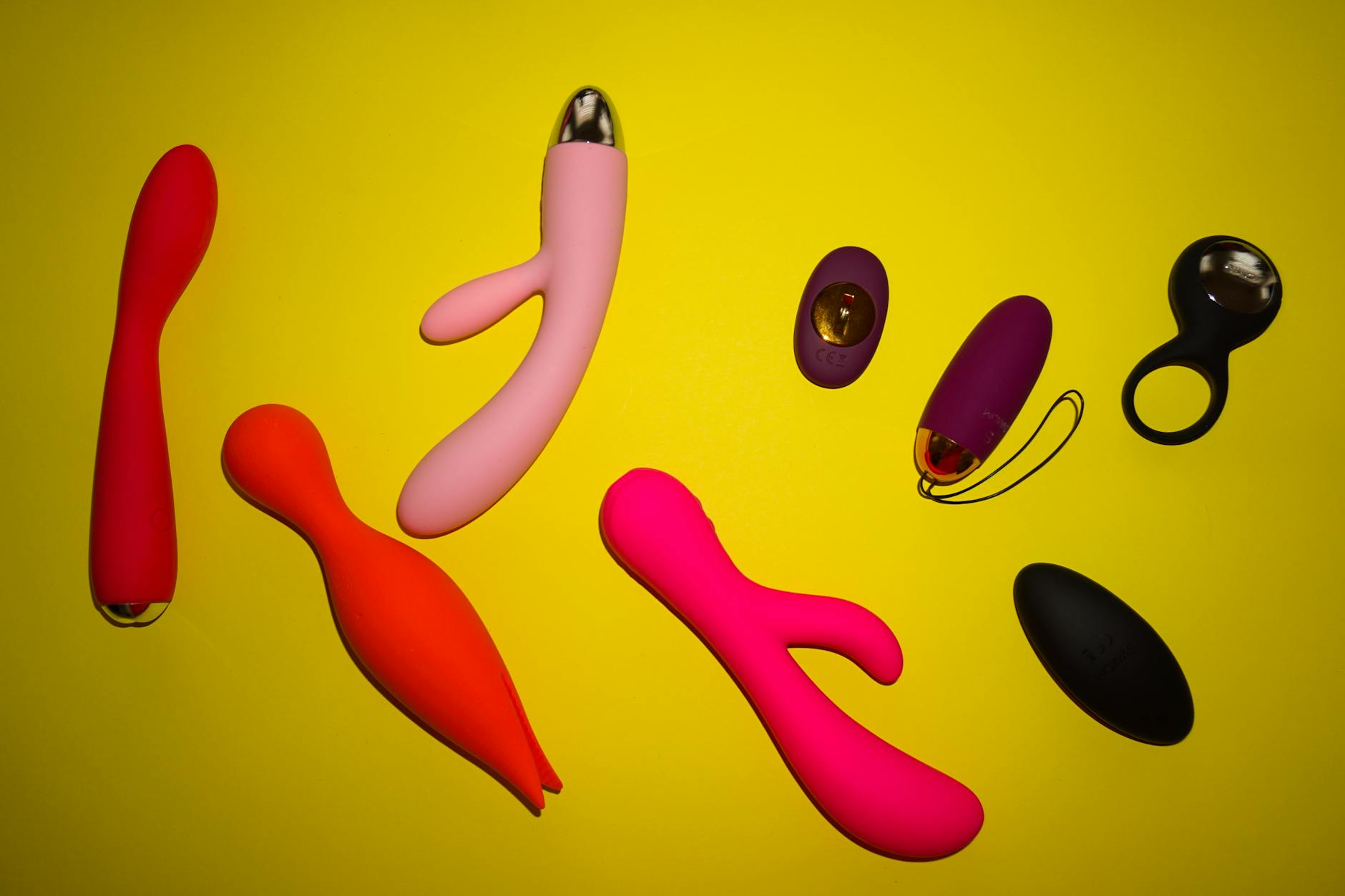
Photo by FounderTips . on Pexels
The conversation that has to happen first
None of this works if you haven't actually talked about it. And I mean talked, not fought about it.
The lower-desire partner usually feels guilty. They think something is wrong with them. The higher-desire partner usually feels rejected and angry. So the first conversation is separating those feelings from the facts.
Fact: You have different baseline desire levels. This is normal. About 30 to 40 percent of couples deal with this.
Fact: It doesn't mean one of you is broken. It means you're different.
Fact: The solution isn't for the low-desire partner to force themselves. That breeds resentment on both sides.
Fact: The solution isn't for the high-desire partner to suppress their needs. That breeds resentment too.
The actual solution is separation. Your pleasure is your responsibility. Your partner's pleasure is their responsibility. Partnership is connection, not obligation. Once you've named that, lemon vibrators become a practical tool, not a weird workaround.
I recommend framing it like this: "I've noticed we want sex at different frequencies. That's okay. What I want to explore is a way where I can take care of my sexual needs without putting pressure on you, and you can take care of your need for rest or low-pressure time. A lemon vibrator lets me do that. Are you open to me having that kind of pleasure alongside our partnership?"
Notice what that does. It names the problem. It takes responsibility for solving it. It asks permission instead of demanding compliance. Most lower-desire partners relax when they hear this. They suddenly realize they're not broken. The higher-desire partner stops feeling rejected. The dynamic shifts.
Why lemon vibrators specifically help here
Not all vibrators are equal for this particular problem. Wand vibrators are intense but loud. Rabbit vibrators require more setup and positioning. Lemon vibrators and lemon clitoral suckers work specifically because they're discreet, they're fast, and they don't require a lot of foreplay to work.
A lemon clitoral vibrator gets you to orgasm in five to eight minutes with minimal warm-up. This matters because it removes the "I need a long lead time" problem that can tank low-desire partners even further. You're not asking them for 30 minutes of engagement. You're asking for 10 to 15 minutes of presence. That's much easier to say yes to.
The suction design of lemon toys also means you can use them solo or with a partner present without it being visually obvious or emotionally heavy. It's just there. It's efficient. It gets the job done.
When to add conversation into the pleasure
After a few weeks of this pattern, some couples find that the low-desire partner becomes more interested when they're not under pressure. Others don't. Both outcomes are fine.
What matters is the check-in. Every month or two, say: "This is working for me. How is it for you?" The low-desire partner might say they love the pressure being off and want it to stay exactly like this. The higher-desire partner might say they miss more partnered sex but that they feel less resentful. Both of those conversations lead somewhere useful.
Some couples find that having lemon vibrators in the rotation actually increases partnered sex because the pressure is gone. Some find that it stays stable and they're just both happier. Neither is wrong.
When to bring in a therapist
If desire mismatch is part of a bigger pattern of disconnection, you might need help. If your partner never wants physical touch at all, not just sex. If you're both angry about it and the vibrator doesn't shift that. If you're questioning whether you're compatible at all.
That's the moment to see a couples therapist, ideally one trained in sex-positive work. They can help you figure out whether this is solvable difference or fundamental incompatibility. Both answers are valid. But you want to know which one you're dealing with before you invest another five years.
What changes when you stop making sex the problem
Once you've separated your pleasure from your partner's obligation, something interesting happens. You have less sex, but it's better. Your partner feels less guilty. You feel less rejected. The sex you do have isn't loaded with resentment.
Lemon vibrators aren't a replacement for partnered sex. They're a solution for the gap between what you want and what your partner can genuinely offer. And that gap is real. It's not something you negotiate away or shame into compliance. It's something you work around.
Your pleasure matters. Your partner's boundaries matter too. Tools like lemon clitoral vibrators let you honor both.
People also ask
Will using a lemon vibrator make my partner feel replaced?
Not if you frame it right. You're not using it instead of them. You're using it alongside them, to take pressure off both of you. A good conversation before you start makes that clear. Something like, "I want to enjoy my sexuality without waiting for your desire to match mine. This isn't about you not being enough. It's about me taking care of myself." That's different from "you're not satisfying me, so I'm getting a vibrator." The first opens a door. The second closes one.
Can we use a lemon vibrator together if my partner has low desire?
Absolutely. Some low-desire partners enjoy being present while a higher-desire partner uses a lemon clitoral vibrator. It's intimate without being demanding. You get pleasure. They get to participate at their own pace. And there's no performance pressure. Start with a conversation about what that would look like, and make sure there's genuine willingness, not obligation.
What if my partner is uncomfortable with me using a vibrator?
That's worth exploring. Often it's not actually about the vibrator. It's about feeling replaced, or insecurity, or a belief that sex should only happen together. Have a real conversation. Ask what they're worried about. Listen without defending. And then, gently, explain that your pleasure is non-negotiable. You're not asking permission. You're sharing what you need and hoping they can support it. If they genuinely can't, that's information about your compatibility.
How do I know if desire mismatch is the real problem or if I'm using it as an excuse?
Ask yourself this: If your partner matched your desire level perfectly, would you be happy with them otherwise? Do you like them? Do you respect them? Do you enjoy being around them when you're not fighting about sex? If the answer to all three is yes, it's desire mismatch. If the answer is no, the real problem is bigger than frequency. A lemon vibrator won't fix that.
Is it normal for desire to mismatch in long-term relationships?
Very. The research suggests that most couples experience desire differences at some point. It's so common that mismatched desire is one of the top reasons couples seek therapy. You're not broken. Your relationship isn't broken. You're just dealing with one of the most normal problems in partnership. And unlike some things, this one has actual solutions.
Should we still have partnered sex if we're using lemon vibrators for the desire gap?
Yes, but only when both people actually want it. The pressure to perform for your partner is what kills desire. So the framework is: when the lower-desire partner genuinely wants sex, you have it. When they don't, the higher-desire partner uses a lemon vibrator. This takes away the obligation piece that usually tanks desire in the first place. Some couples find they end up wanting partnered sex more often once the pressure is gone. Others find their pattern stabilizes. Both are fine.
The thing nobody tells you about desire mismatch
It's not a sign that you chose wrong. It's a friction point that happens in most long-term relationships, and it's one of the few that you can actually solve without breaking up or resigning yourself to years of resentment.
Lemon vibrators won't save a relationship that's fundamentally broken. But they will solve the specific problem of mismatched desire in a partnership that's otherwise solid. They take the pressure off. They let you both have your needs met. And they do it without requiring anyone to perform, compromise on genuine boundaries, or feel guilty.
That's not a workaround. That's actually the closest thing to a win that exists for this problem.