
How to Use Lemon Vibrators When Desire Returns After Years of Avoidance
Let's be real: you've been avoiding this for a while. Not out of shame, exactly. More out of disconnection. Years of low desire, numbness, or just not bothering have created a gulf between you and your body's pleasure responses. Now something's shifting. Maybe you're in a new relationship. Maybe your stress has finally lifted. Maybe you just woke up one day and thought, "I want to feel again."
The problem? Coming back to pleasure after extended avoidance is wildly different from other transitions. Your body has memories. Your nervous system has learned patterns. And restarting isn't about jumping back to where you left off, because that place doesn't exist anymore.
Here's what I see in my practice, and what actually helps.
What happens in your nervous system during long-term avoidance
When you avoid sex or self-pleasure for months or years, your nervous system doesn't just forget about it. It recalibrates around the avoidance. Pleasure pathways get quiet. Touch that used to feel electric registers as neutral. Your body learns to dampen arousal signals before they even reach your brain.
This isn't laziness or loss of interest. It's protective. Avoidance usually comes from somewhere: past pain, relationship disappointment, depression, burnout, or just repeated decisions to put pleasure last for so long that it stopped feeling like an option. Your system is doing exactly what it should. It's protecting you from wanting something you've decided you can't have.
The shift happens when that protective logic no longer serves you. When desire starts whispering again, your body doesn't simply flip a switch. It takes time for your nervous system to trust that pleasure is safe now. That's the threshold most people miss.
Why returning to pleasure feels slower than expected
Three things change when you've been away:
Your baseline arousal is genuinely lower. Not broken, just quiet. It takes longer for your body to recognize the signals. Your clitoris hasn't atrophied, but the pathways for sensation registration have been dormant. The first time you try again, you might feel almost nothing. That's expected. That's not failure.
Psychological readiness and physical readiness don't sync. Your brain might be ready. "I want this. I deserve this." But your body is still learning to trust. You'll be thinking about what to do while your body is still catching up. This mismatch is where most people quit. They assume something's broken. It's usually just timing.
Sensation after avoidance isn't symmetrical with sensation before. You can't return to exactly where you left off because you're not the same nervous system you were. You might find that patterns you loved once now feel too intense or too gentle. Or weirdly, sometimes a sensation feels more intense because your body is no longer dampening its own signals. Expect surprise.
How lemon clitoral vibrators fit into this restart
After years of avoidance, the lemon vibrator works better than some other tools because of how it's designed.
The suction-based stimulation gives your nervous system permission to respond without overwhelm. It's not friction. It's not constant buzzing. It's a pattern that mimics how a partner's mouth works, which means your body recognizes it instinctively. Your nervous system has ancient wiring for this sensation. It doesn't have to learn it from scratch.
The Lemon's variable patterns (you can start on setting 1 or 2 and build up) let you control how quickly you're asking your system to wake up. This matters when you're restarting. You don't need intensity. You need consistency and safety.
The actual protocol for restarting with a lemon vibrator
Here's what I recommend:
Week 1-2: Exploration, no goal. Use the Lemon on the lowest setting (pattern 1). Your job isn't to orgasm. It's to feel sensations without pressure. Five to ten minutes, once or twice a week. Nothing more. Your nervous system is learning that this is safe. That this is allowed. Don't rush it.
Week 3-4: Pattern variation. Stay on low intensity but try different patterns. See which one your body leans into. You're building a map of what feels good now, not what used to feel good. That's a different thing.
Week 5+: Slow intensity increase. Move to pattern 3 or 4 if the lower ones start to feel familiar. Familiarity is good. It means your nervous system is settling. Increase frequency to 2-3 times per week if it feels right. Your body will tell you.
Duration guideline: Budget 15-25 minutes minimum. Your arousal is slower to build. Rushing defeats the point. If you get distracted, that's fine. Distraction is your nervous system checking that you're safe. Let it check. Just stay present with the sensations.
What to expect and what to worry about
Expect nothing the first time. Seriously. Some people feel a flutter. Some feel almost nothing. Both are normal. Your nervous system is waking up. It takes time.
Expect your mind to wander. After avoidance, reconnecting to pleasure requires you to be present in a way you might not have practiced in years. Your brain will offer distractions. That's not wrong. Just gently notice and come back.
Expect sensations to feel different than before. Maybe stronger. Maybe more localized. Maybe weirdly gentle. This is your body responding authentically now, not through the filter of years of dampening.
What you shouldn't expect: instant desire. Immediate orgasms. The rush you felt five years ago. You're not trying to recreate the past. You're creating new pathways.
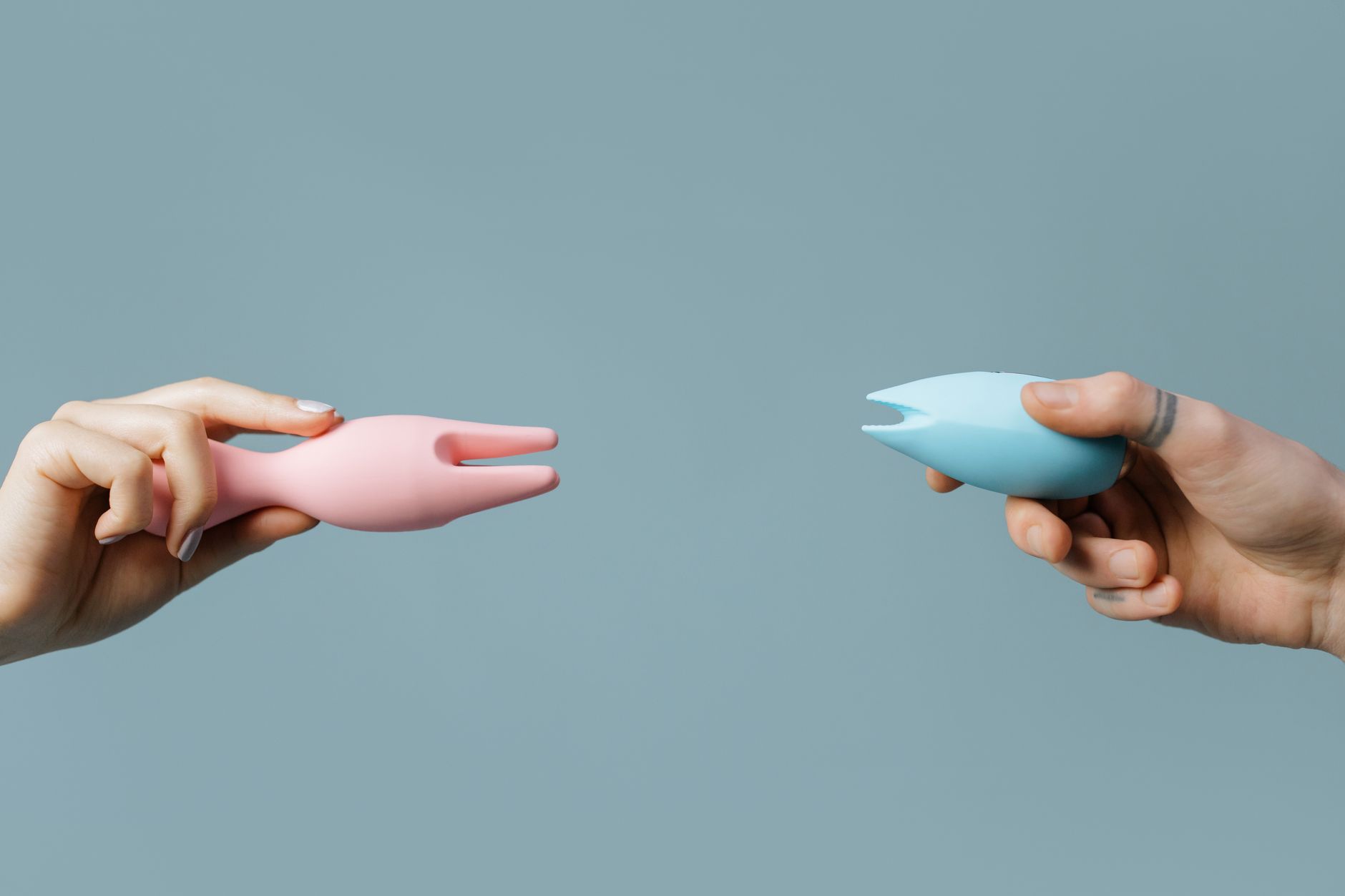
Photo by cottonbro studio on Pexels
The role of context and safety
Your nervous system needs to know it's safe before it can relax into pleasure. This is non-negotiable.
If you're restarting in a relationship, your partner needs to understand this is a solo journey first. You're rebuilding your own sensation map. Bringing them in too early often kills momentum because now you're managing their expectations while trying to reconnect with your own body. That's too much load.
If there's relationship history that caused the avoidance (infidelity, disconnection, breach of trust), that work happens separately. You might be using the Lemon as part of rebuilding, but you're not using it as a shortcut around the relational repair. Those are two different processes.
Create physical space. Time when you won't be interrupted. A locked door. Dim light or whatever makes you feel calm. No phones buzzing. No one expecting you anywhere. Your nervous system needs to know it can fully relax.
When desire still doesn't return
Sometimes restarting stalls. You use the Lemon. You follow the protocol. And still nothing clicks. The sensations register but don't build. The interest doesn't follow.
This happens most often when the avoidance had a physical cause: thyroid changes, medication side effects, chronic stress, unhealed physical pain. Before you assume it's psychological, talk to a doctor. Some of it might be biochemical.
It also happens when the avoidance was protective against something deeper: unresolved trauma, grief, genuine relationship incompatibility. In those cases, the Lemon won't fix it. You need to address the root. A therapist trained in trauma or sex therapy can help you sort out whether what you're feeling is protective numbness or something else.
But here's the thing: if you're reading this, something's already shifting. Desire doesn't whisper back unless your system is starting to believe it's safe. Trust that whisper. Move slowly. Give your body time.
People also ask
How long does it usually take for sensation to come back after sexual avoidance?
It varies wildly. Some people feel shifts within 2-3 weeks. Others take months. The timeline depends on how long the avoidance lasted, whether there was trauma involved, and what your current stress level is. One general rule: the longer the avoidance, the slower the return. Be patient with your own timeline. Comparing yourself to someone else's restart is the fastest way to kill your own momentum.
Can I use a lemon vibrator if I'm numb and can't feel much?
Absolutely. That's actually when it's most useful. Numbness is common after avoidance. The Lemon's suction-based stimulation tends to wake up sensation faster than other tools because it's working with ancient neural pathways. Start very low and just let sensations be whatever they are. You're not trying to feel a specific thing. You're just creating space for your body to respond.
Is it normal to feel guilty or anxious when restarting pleasure?
Completely normal. If the avoidance was connected to relationship issues, grief, or even religious upbringing, your nervous system might have learned that pleasure requires shame. Anxiety during restart is your system checking whether it's actually safe. Don't fight it. Notice it, breathe through it, and keep going gently. The anxiety usually softens as you repeat the experience and nothing bad happens.
What if my partner wants to be involved in this restart?
Slow that down. Restarting solo first means you're building your own relationship with sensation before you bring someone else into it. Once you've reconnected on your own (4-6 weeks, roughly), introducing your partner makes sense. But trying to restart while managing their presence or expectations usually backfires. Have that conversation upfront: "I need to rebuild this on my own first. I'll let you know when I'm ready."
Can I use a lemon vibrator alongside therapy for this?
Yes, actually. If you're working with a sex therapist or trauma therapist, mention that you're restarting with a tool like the Lemon. Good therapists will integrate this into the work. It's not either/or. The therapy addresses the why; the tool addresses the how.
What if I restart and still feel nothing?
That's a signal to pause and investigate. Sometimes nothing means your body genuinely needs more time. Sometimes nothing means there's something else going on: depression, medication effects, or deeper avoidance you haven't named yet. Check in with yourself honestly. If it's been 6-8 weeks and there's genuinely zero shift, it's worth talking to a therapist or doctor. Don't push yourself into feeling something that isn't there.
The long view
Restarting pleasure after avoidance isn't a quick return to baseline. It's a complete rewiring of your nervous system's relationship with sensation. That takes time. It takes patience. It takes showing up even when nothing seems to be happening.
The lemon clitoral vibrator helps because it speaks a language your body understands instinctively. But the real work is your willingness to slow down, be present, and let your body wake up on its own timeline.
Your desire returning isn't weakness or indulgence. It's a sign that somewhere deep down, you've decided you're worth feeling good. Hold onto that. Build from there.
If you're navigating this transition and the path feels unclear, reach out. Connection and expert guidance can make the difference between a restart that stalls and one that actually lands.