Let's talk about what actually happens when you take a break from birth control
Your hormones don't just flip a switch when you stop taking the pill, the patch, or the shot. They recalibrate. For some people, that recalibration is seamless. For others, it comes with some friction: your arousal might feel muted, your body slower to respond, or your usual turn-ons suddenly less magnetic.
That's not broken. That's your endocrine system remembering how to regulate itself without pharmaceutical help.
Why hormonal birth control changes pleasure (and why the break changes it again)
Hormonal contraception works by suppressing your natural estrogen and progesterone fluctuations. That stability is why many people feel more even moods and less intense cramping. But it also flattens the peaks and valleys that naturally drive libido. Estrogen dips and testosterone rises (yes, people with ovaries make testosterone) trigger arousal. On hormonal birth control, those swings are intentionally dampened.
When you stop, your body floods with sensation signals it hasn't been sending for months or years. Your clitoris becomes more sensitive. Blood flow patterns shift. Lubrication changes. Your nervous system recalibrates its baseline for what "turned on" feels like.
This adjustment period typically lasts 2 to 4 weeks, though it can stretch longer depending on which contraceptive you were using and how long you took it. An intrauterine device leaves your hormones alone, so the transition is usually quick. The pill or shot can take longer because synthetic hormones linger in your system.
The sensation gap during the transition
Here's the sneaky part: during the restart, your body knows it's supposed to feel pleasure, but the neural pathways are still rewaking. You might feel aroused mentally but unmoved physically. You might need more direct stimulation than usual. You might feel hypersensitive one day and muted the next.
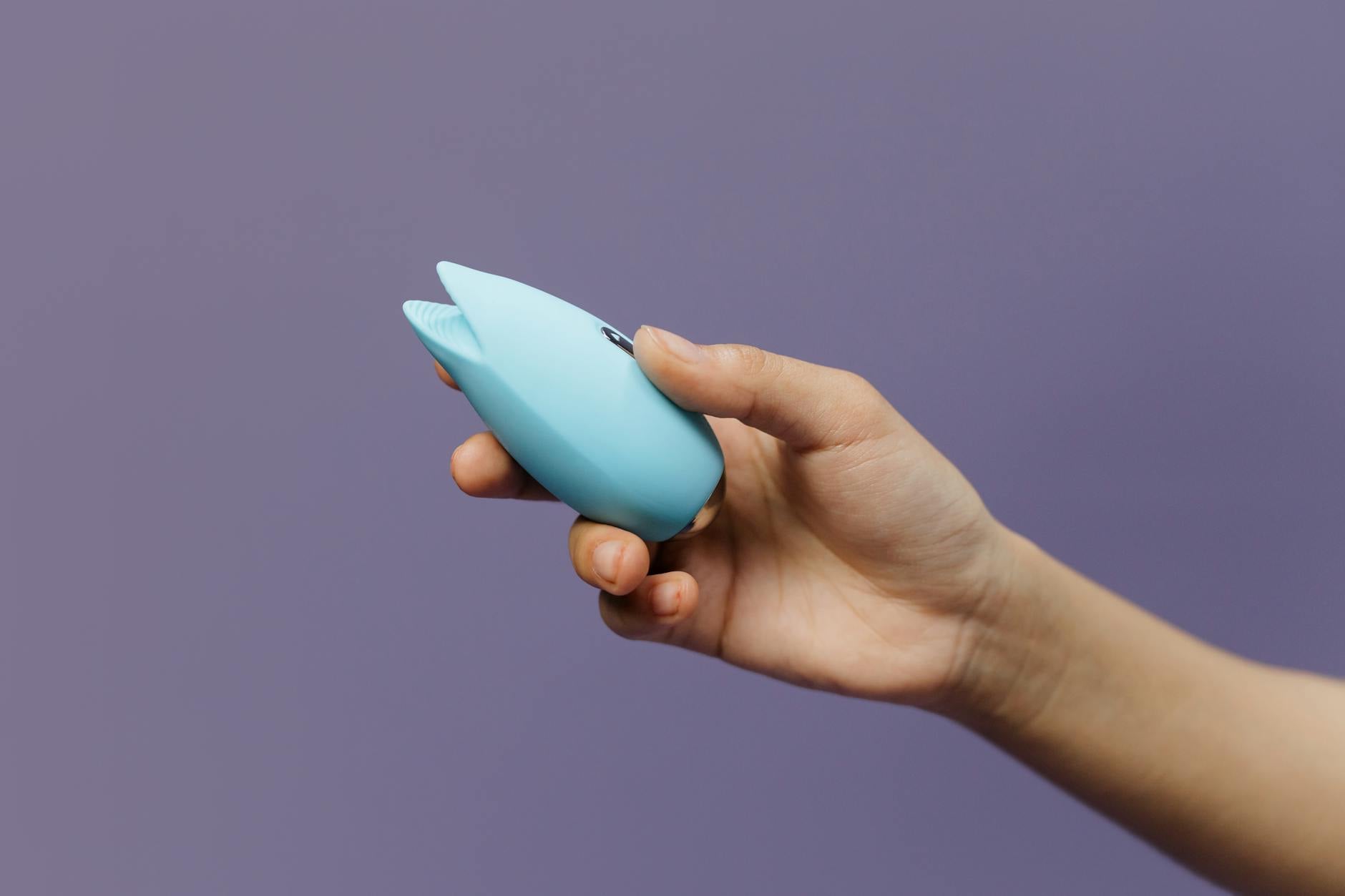
This is temporary. But it's also frustrating. And it's where lemon sexual toys, especially air-suction clitoral vibrators like the Lem, actually excel.
Air-suction technology doesn't rely on the same mechanical stimulation as traditional vibrators. Instead, it creates rhythmic micro-suction pulses that stimulate the thousands of nerve endings in your clitoris without requiring the kind of direct pressure that can feel too intense or numb out when you're already confused about your own sensation baseline. It's less about muscle-shaking vibration and more about layered, complex stimulation patterns that wake up sensitivity without overwhelming it.
Three immediate tools for reconnecting during the transition
1. Micro-intensity settings. When you restart pleasure after a hormonal shift, don't begin at full power. The Lem and similar lemon clitoral vibrators have settings 1 through 6. Spend your first week exploring patterns 1 and 2. Your nerve endings are remembering their job. Let them. Starting soft isn't a step backward; it's how you teach your body that sensation is coming and it's safe to respond.
2. Lengthened warm-up time. Your blood flow takes longer to reach your genitals during the recalibration period. Budget 20 to 30 minutes of foreplay or self-touch before introducing your lemon vibrator. Kiss your partner. Touch your own breasts and thighs. Read erotica. Get your nervous system primed. Then bring in the toy.
3. The two-zone approach. Your clitoris isn't one button. It has external and internal sensation zones. After a hormonal break, switching between them helps. Start with your Lem on the visible clitoral head for 2 to 3 minutes, then move it to the body of the clitoris (slightly higher, where the root is) for another 2 to 3 minutes. This variation prevents the numbness that can come from too much continuous pressure in one spot.
Why lemon clitoral vibrators outperform standard vibrators during hormonal transition
Traditional vibrators rely on rapid oscillation. That works beautifully when your nerve sensitivity is stable. But during a hormonal recalibration, rapid vibration can feel either too intense or conversely, numb you out because your nervous system doesn't have the hormonal scaffolding to process it.
Lemon air-suction vibrators work differently. They create suction and release cycles that mimic the sensation of oral stimulation. This pattern is less about frequency and more about rhythmic pressure waves. For someone whose baseline arousal is still resetting, those waves are easier for your nervous system to register and respond to. It's like the difference between someone tapping your shoulder very fast versus someone squeezing it gently and releasing repeatedly. One registers, one doesn't.
Additionally, lemon sexual toys tend to have smaller, more focused stimulation heads than standard wand vibrators. During hormonal transition, precision matters. You want the tool to hit the exact spot that's waking up, not diffuse stimulation across a wide area.
The partner dimension during your transition
If you have a partner, this is worth naming explicitly. You're not less interested. Your body is rebooting its arousal hardware. That's not your fault and it's not theirs. But it does change the rhythm temporarily.
When you introduce a lemon clitoral vibrator into partner play, frame it accurately: "I want to use this to show you where my body is most responsive right now." This shifts the toy from feeling like a replacement to feeling like a translation device. You're collaborating with the toy to figure out where the sensation is, rather than the toy doing the work while your partner watches helplessly.
Many couples find that the recalibration period, handled with honesty and the right tools, actually deepens their connection. Because you're not faking arousal or forcing sensation. You're both invested in learning what your body needs at this moment.
Tracking your own recalibration
Usually by week 3 or 4 off hormonal birth control, pleasure starts to feel more recognizable. You'll notice you're getting wet faster. Your orgasms might feel more intense or arrive more easily. Your desire for your partner, or for solo pleasure, returns with more predictability.
If you're using a lemon vibrator, you might notice that patterns you were using at setting 2 suddenly feel too soft by week 3. That's a good sign. Your system is recalibrating. Turn up the intensity accordingly.
If pleasure still feels muted after 6 weeks, check in with yourself: Are you stressed? Sleep-deprived? Still adjusting to other hormonal changes (like cycle length)? Sometimes the delay isn't about the birth control break itself but about life circumstances that suppress arousal. A conversation with your doctor or a therapist can help sort that out.
When to keep using lemon vibrators even after the transition
Once your arousal recalibrates (and it will), you don't have to ditch your lemon clitoral vibrator. Many people find that air-suction technology remains their preference long-term, especially if they notice that traditional vibration numbs them out over extended use, or if they want stimulation that feels more like partnered pleasure than machine-driven intensity.
The Lem and similar lemon adult toys are designed to work well across different hormonal phases. Once your baseline resets, you'll have a clearer sense of what pleasure feels like for your body right now. That clarity is the gift of the transition period. Use it.
FAQ: Lemon vibrators and hormonal birth control breaks
How long does arousal typically take to return after stopping hormonal birth control?
Most people notice shifts within 2 to 4 weeks. Full recalibration, where arousal feels consistent again, usually happens by week 6 to 8. Intrauterine devices cause faster changes (days to a couple weeks) because they don't alter your hormones systemically. The pill and shot take longer because synthetic hormones remain in your bloodstream longer.
Can I use a lemon vibrator immediately after stopping birth control, or should I wait?
You can use a lemon clitoral vibrator right away. But start on lower settings. Your body hasn't recalibrated yet, so intense stimulation might feel either overwhelming or numb. Think of it like easing back into exercise after time off. You wouldn't max out on day one. Use lower patterns to remind your nervous system that pleasure is available, then increase intensity as sensation returns.
Why does my lemon vibrator feel less intense after stopping birth control?
That's counterintuitive but real: during the first 1 to 2 weeks off hormonal birth control, your clitoris is actually hypersensitive to broad-spectrum stimulation, but your arousal response is muted. You might feel overstimulated and undersexed simultaneously. Using air-suction lemon sexual toys on lower settings helps because they stimulate without overwhelming. As your system recalibrates, the intensity should feel more normal.
Should I use my lemon vibrator differently across my cycle after stopping birth control?
Yes. Once your cycle returns to normal (usually 2 to 3 months), you'll notice that your arousal naturally peaks during ovulation and a few days before menstruation. You might need different settings or patterns at different times of your cycle. Spend your first 3 months exploring this. That's the data you need to use your lemon clitoral vibrator most effectively long-term.
Is it normal for orgasms to feel different after a hormonal birth control break?
Completely normal. Some people report more intense, full-body orgasms once hormonal birth control is out of their system. Others notice their orgasms feel more localized or take longer to build. This usually stabilizes within 2 to 3 months. If orgasms remain painful or feel completely absent after 8 weeks, worth a conversation with your doctor to rule out other factors.
Can my partner help me transition more smoothly with a lemon vibrator?
Absolutely. The best approach is explicit communication: tell your partner what you're experiencing (muted arousal, slower response, different preferences), show them how your lemon vibrator feels different than before, and invite them to experiment with you rather than defaulting to the old rhythm. Many couples find this transition period actually strengthens intimacy because both partners are paying attention.
The bottom line
Taking a break from hormonal birth control is a recalibration, not a regression. Your body is remembering how to produce its own arousal signals. Lemon clitoral vibrators, especially air-suction models, are excellent tools for that transition because they work with sensitivity shifts rather than against them. Start soft, be patient, and give your nervous system the time it needs. The pleasure you're looking for isn't gone. It's just reorganizing itself.