The IUD window nobody talks about
You get the hormonal IUD inserted. Your doctor says "you're protected" and sends you home with ibuprofen and a heating pad. What they don't always mention is that the first three to six months are a recalibration period. Your body is learning to live with synthetic progesterone releasing directly into your uterus. Your libido, sensation, and orgasm capacity are all being rewired in real time.
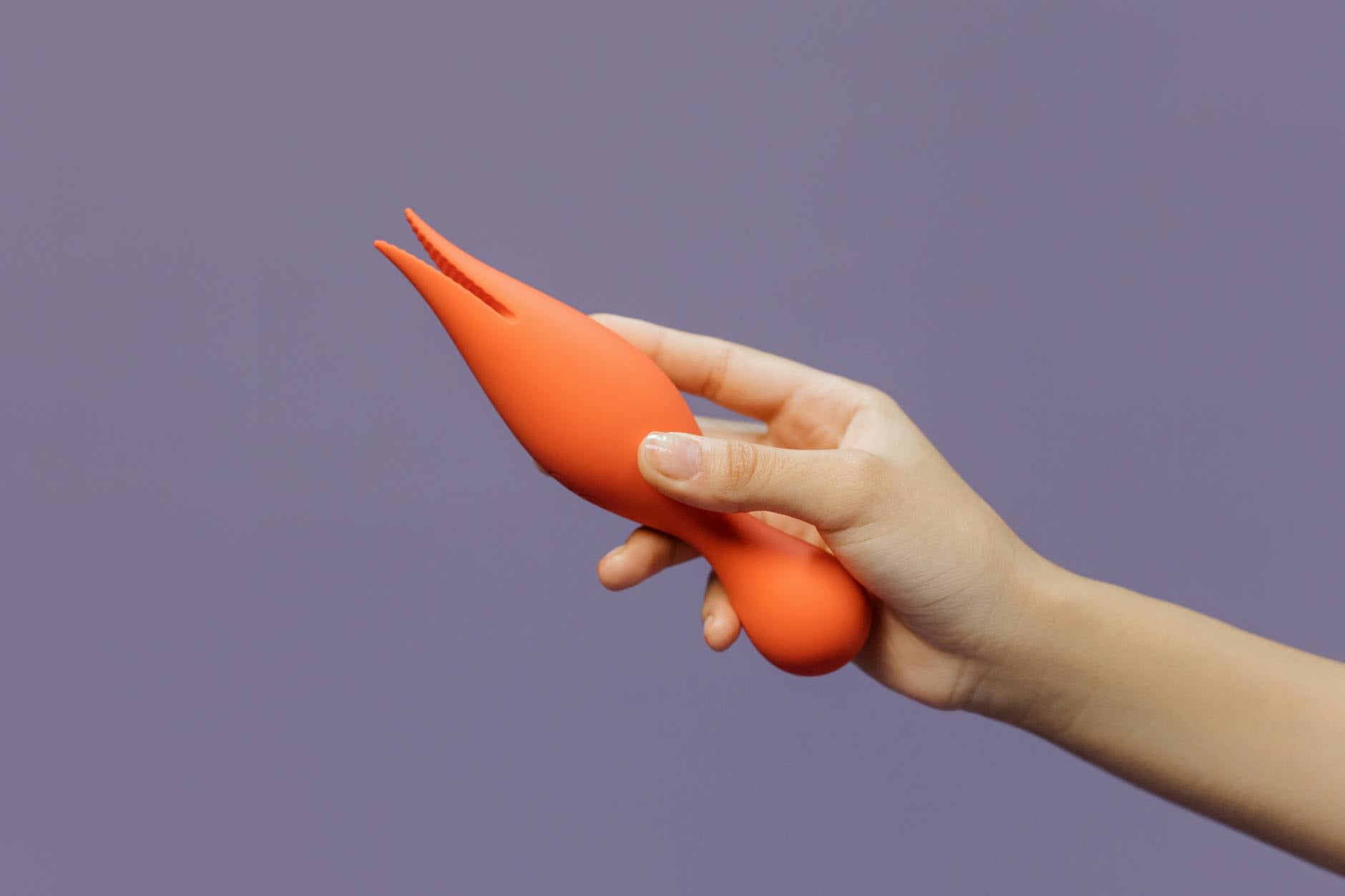
This isn't permanent. But it's also not nothing. And it's weirdly common for people to assume their pleasure is broken when really, their nervous system is just adjusting. Lemon vibrators, with their unique suction-based stimulation, actually work better than traditional vibrators during this adjustment window. Here's why.
What synthetic progesterone actually does to desire
Hormonal IUDs release levonorgestrel (a synthetic progestin) slowly over months. About 20% of users report a dip in libido in the first six months. Some experience it for longer. The mechanism is straightforward: progesterone dampens dopamine signaling in the reward centers of your brain. Dopamine drives desire. Lower dopamine means lower desire.
At the same time, your body is producing less estrogen overall (hormonal IUDs suppress ovulation in many users). Estrogen fuels genital blood flow, lubrication, and clitoral sensitivity. So you're dealing with a double hit: less desire, less physical responsiveness.
The temptation is to panic. Instead, it's worth understanding that this is temporary neural noise, not permanent loss of capacity.
Sensation changes in the first three months
Most people notice three specific shifts:
Your arousal buildup takes longer. Where you might have gotten turned on in five minutes, you're now looking at fifteen. Your body isn't broken; the neural pathway is just moving slower. Budget extra time. This is actually an opportunity to explore sensation more deliberately.
Your clitoral sensitivity becomes more localized. Rather than full-body arousal radiating outward, you might feel stimulation more concentrated in a smaller area. This is where the Lem's gentle suction differs from traditional vibration. Suction doesn't require the same neural threshold as friction. It can trigger pleasure even when your sensitivity is dampened.
Orgasms feel shallower or less frequent. Some users report no change. Others notice their orgasms are less intense or take longer to reach. Again, this usually reverses. But in the meantime, a lemon vibrator's patterned suction can sometimes help because it doesn't rely on the same mechanical friction that might feel uncomfortable on tender tissue.
Why lemon vibrators work during IUD adjustment
Let me break down the mechanism. Traditional vibrators rely on friction and frequency to stimulate nerve endings. They're effective, but they require a baseline level of sensitivity to feel good. When your nervous system is dampened by hormonal changes, they can feel overwhelming or underwhelming at the same time.
Lemon vibrators use pulsed suction instead. This is gentler on tissue that's slightly inflamed from insertion (even months later). It doesn't require aggressive friction. And because suction activates different nerve endings than vibration, it can sometimes bypass the dulling effect of synthetic progesterone.
The other advantage: patterns. Most lemon suction devices offer multiple suction patterns and intensities. During adjustment, you can start at patterns one or two and stay there comfortably. You're not forcing yourself into high-frequency vibration when your body isn't ready.
Your adjustment protocol: weeks one to three
Right after insertion, rest. Your cervix and uterus need time. Week one is not the time to experiment with any stimulation. Pain or heavy bleeding is your body saying "not yet."
By week two or three, if pain and bleeding have settled, gentle external stimulation is fine. Here's how I'd approach it:
Use the Lem at its lowest setting, lowest pattern. Don't use it daily. Every three or four days, spend ten to fifteen minutes on your own, exploring what feels okay. The goal isn't orgasm. It's checking in with sensation.
You might notice that pattern two feels better than pattern one. Or that the Lem feels nice for two minutes and then feels numb. Both are normal. Your nervous system is sending conflicting signals. Don't push through numbness. Stop, rest, come back another day.
If you're partnered, this is not the time to perform for someone else. Pleasure during adjustment needs to be self-directed so you can listen to your actual body instead of anticipating what your partner wants.
Months two to six: rebuilding sensitivity
By the second month, most people's pain and bleeding have settled. Your body is starting to acclimate to the device. Desire still might be low, but the acute inflammation is gone.
This is when you can be more intentional. Try this progression:
Start with longer warm-up time. Spend ten to fifteen minutes touching yourself, breathing, maybe looking at something that interests you. This is not rushing toward orgasm. It's rebuilding the neural pathway that says "my body responds to pleasure."
Once you feel a shift in arousal (even a small one), bring in the Lem. Start with patterns one through three and stay there for a few minutes. Let yourself get used to how it feels against sensitive tissue that's in flux.
If you're chasing an orgasm, you'll probably feel frustrated. Instead, try this: use the Lem with no goal. See how many sensations you can notice. Is there a pulse? A gentle pull? A warm feeling? Can you notice where the sensation starts and ends?
This isn't meditation nonsense. It's literally retraining your nervous system to recognize pleasure signals when dopamine is low. Orgasm might come, might not. Either way, you're rebuilding the pathway.
If numbness happens, stop. This is important. Pushing through numbness teaches your nervous system that pleasure requires aggression. It doesn't. It requires gentleness and patience.
Partner dynamics during adjustment
If you're in a relationship, the IUD adjustment period can be awkward. Your partner might interpret your lower desire as something about them. You might feel pressure to perform before you're ready.
Honest conversation helps. Something like: "My body is adjusting to the IUD for the next few months. Desire and sensation feel different right now. I'm going to spend some time exploring pleasure on my own so I understand what's happening. This isn't about you." Most partners appreciate clarity.
If your partner wants to be involved, that's fine. But they need to know that your priority is listening to your body, not providing performance. Sometimes that means stopping when it doesn't feel good. Sometimes it means taking a week off. That's normal.
Once your body stabilizes, usually by month four or five, things shift. The dopamine adjustment settles. The inflammation fully resolves. Desire often bounces back. Sensation becomes sharper. This is when partnered pleasure can feel easier again.
When to check in with your doctor
If numbness or low desire persists past six months, mention it at your next check-up. Some people genuinely don't adjust well to hormonal IUDs. If that's you, a different method might be worth exploring.
If you're experiencing pain during stimulation (not just discomfort, but pain), see your doctor sooner. This could indicate improper placement or infection, both of which need professional attention.
Low desire that lasts years can sometimes be addressed with a different IUD type or a completely different contraception. You don't have to suffer through it.
The timeline is personal
Some people adjust in three months. Others need a full six. A few find they don't adjust at all. There's no "right" speed. Your body is your body. A lemon vibrator helps because it meets you where you are with adjustment: it works at lower intensity, doesn't require high sensitivity, and offers patterns you can customize as your nervous system recalibrates.
The IUD adjustment period isn't forever. But it's also not invisible. Using tools like the Lem during this window isn't about forcing yourself back to baseline pleasure. It's about staying connected to your body while it changes. That connection matters way more than any orgasm.
People also ask
Can I use a lemon vibrator immediately after IUD insertion?
No. Your uterus and cervix need rest for at least one to two weeks after insertion. Pain and heavy bleeding are signs your tissue is inflamed. Wait until those settle before introducing any stimulation. When you do restart, begin gently and at low intensity.
Will using a vibrator affect my IUD placement?
No. The IUD is anchored in your uterus. External clitoral stimulation with a device like the Lem does not move it or affect its position. If you're worried about placement, ask your doctor to confirm it's correctly positioned at your follow-up visit.
Does low desire from a hormonal IUD come back?
Most of the time, yes. By months four to six, dopamine typically stabilizes and desire rebounds. For some people it takes longer. A small percentage find their desire remains lower than before. This is why honest conversation with your partner and check-ins with your doctor matter. If it genuinely isn't working for your body, there are other options.
Should I tell my partner I'm using a vibrator during IUD adjustment?
That depends on your relationship. If you share a bed and they might notice, honesty is simpler than secrecy. Keep it straightforward: "My body is adjusting. I'm using a lemon vibrator to explore sensation while it recalibrates." If they're understanding, great. If they're threatened, that's a separate conversation about why.
How long does IUD adjustment take for pleasure to feel normal again?
Usually three to six months. Some people notice improvement by month two. Others need the full six. After six months, if desire and sensation haven't shifted back, check in with your doctor. There might be an adjustment medication or a device change worth exploring.
Can lemon vibrators help if I'm experiencing numbness from the IUD?
Yes, sometimes. The gentle suction mechanism can activate sensation when traditional vibration feels numb. But numbness is also your nervous system's way of saying "go slow." Use the Lem at its lowest settings and treat it as exploration, not as a tool to force sensation back. If numbness persists beyond six months, talk to your doctor.
Moving through adjustment with intention
Hormonal IUD adjustment is not a measure of your sexuality or your body's capacity. It's a temporary recalibration while your nervous system adapts to synthetic hormones. Tools like lemon vibrators help because they work gently, offer flexibility, and don't require baseline sensitivity to be enjoyable. Use them as part of a larger practice of checking in with your body and giving yourself permission to take time. Your pleasure will come back. And when it does, you'll know your own body better for having paid attention during the quiet months.