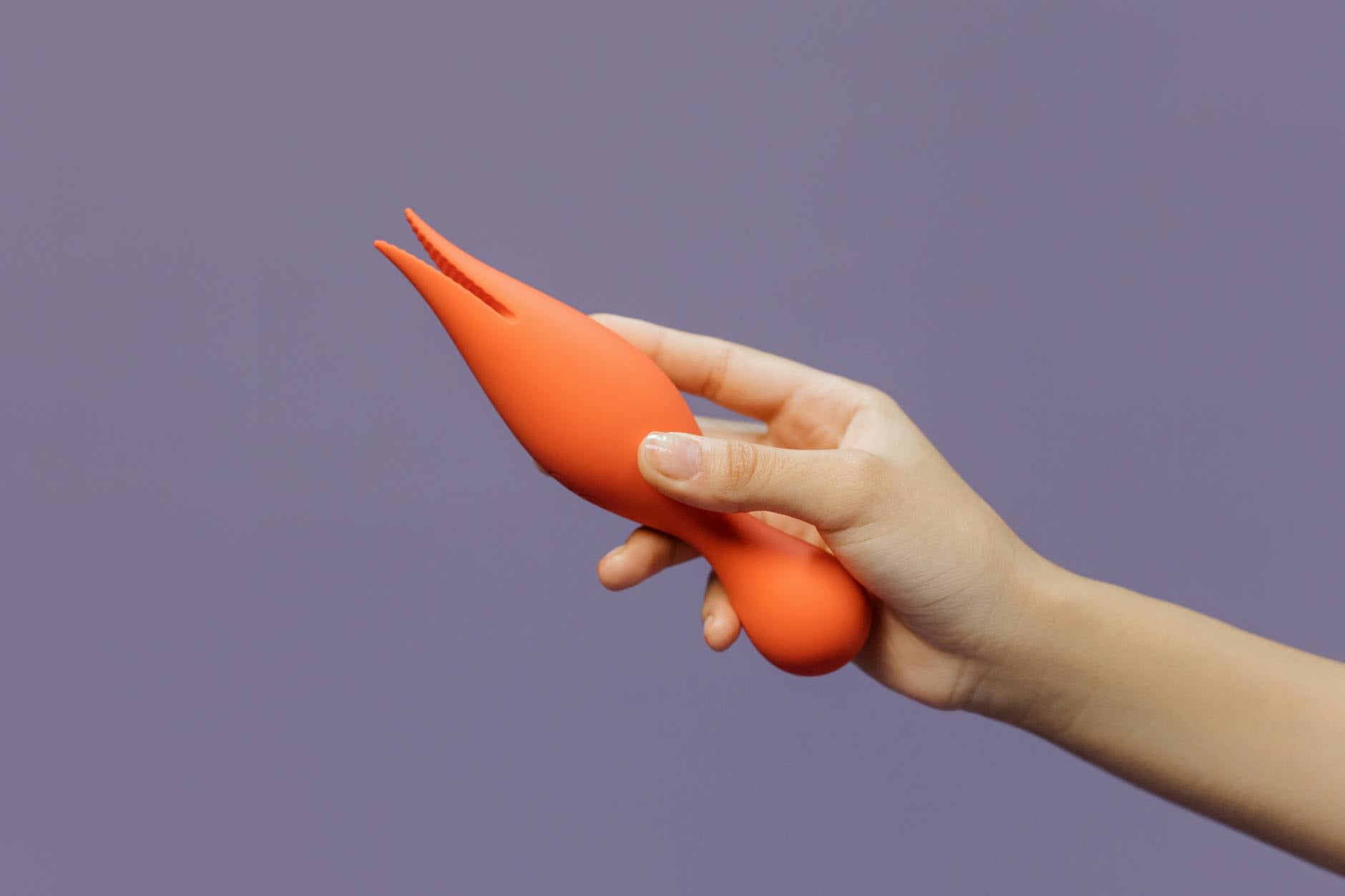
Let's be honest about the fear
You're sitting across from someone you're excited about. Things are good. Physical chemistry is there. And somewhere in the back of your mind is a thought you haven't said out loud: I want to bring my lemon vibrator into this. The silence around that thought feels enormous. You imagine three outcomes: they laugh it off and you feel small, they feel inadequate and blame themselves, or they think you're weird. None of those feel worth it.
Here's the thing though. Most of that fear is imagined. The actual conversation is usually smaller and stranger than you think, in a good way. And if you do it right, it becomes a moment of real connection instead of a moment you're bracing through.
Let me walk you through how.
Why the conversation matters more than you think
Introducing a lemon vibrator or any toy to a new partner isn't really about the toy. It's about saying out loud: I know what I like. I'm willing to ask for it. I trust you enough to be honest. Those three things are relationship infrastructure. Partners who can have a casual conversation about pleasure tend to communicate better about everything else too. Money, boundaries, needs, fears. If you can talk about a clitoral vibrator without shame, you can probably talk about anything.
So this isn't a risk you're taking for the sake of the toy. It's an investment in whether this person can meet you where you actually are.
The best time to bring it up
Timing matters, but not the way you think. You don't need to wait for a "perfect moment." You don't need candles or wine or a speech. You need a moment when you're both relaxed, not in bed yet, and there's no pressure to do anything immediately.
A text message before you see them can work. "Hey, there's something I want to talk about when we're together." This gives them a heads-up and lets you not spring it on them mid-foreplay.
Or bring it up after sex, when you're both relaxed and the stakes feel lower. "I've been thinking about something I want to try with you." That's it.
Avoid: late at night when emotions are tired, right as things are getting physical, or in a context where they feel put on the spot. You want them thinking, not defending.
What to actually say (three frameworks)
Framework 1: The straightforward opener (works best for people who appreciate directness)
"I use a lemon vibrator for solo play, and I've been thinking I'd like to use it with you too. I don't need your permission or anything. I just wanted to be honest about it. What do you think?"
That's it. You've named the object, explained what it does, signaled that you're not blaming them for anything, and opened the door without pushing.
Framework 2: The question (works best if you're uncertain about their openness)
"I'm curious what you'd think if I brought a toy into our sex life. Not because anything is missing with you. Just because I know it intensifies things for me, and I want to include you in that."
This invites them to respond instead of defend. It's collaborative language.
Framework 3: The vulnerability play (works best if you have real chemistry)
"Can I tell you something I'm a little shy about? I've been using a lemon vibrator, and it's genuinely changed how my orgasms feel. I'd love to share that with you. I don't know how you'd feel, but I needed to be honest."
This works because it puts your real feeling first and makes it about trust. Most people respond to that.
What to do if they say yes
Great. Now here comes the actual integration. Don't go straight to using it together. Talk about it first.
Explain what lemon clitoral vibrators do. It's suction-based. It feels different from penetration or manual stimulation. It's for external stimulation. It can feel intense at first. You control the rhythm and intensity.
Then ask: How do you feel about being in the room while I use it? Do you want to be involved, or would you rather watch? Do you want to use it on me, or do you prefer I handle it? These aren't unusual questions. You're just clarifying.
Then set the bar really low for the first time. Don't expect your best orgasm or even a smooth experience. Expect awkwardness. Expect to laugh. You're learning how to move together around a new variable. That takes practice.
When they say no (or hesitate)
This is where you find out what you're actually dealing with. Listen for what's underneath the no.
If they say "I don't feel comfortable with that": that's a boundary. Honor it. You can ask once if they're open to talking about why, but don't push. A hard no is a hard no.
If they say "I feel like I'm not enough": this is your opening to be clear. "That's not what this is. Your body and you are incredible. This just happens to be something my body responds to. It's not about you." Then give them time to believe you.
If they say "Can we try it a different way?": they're interested but have a different image. Work with that. "What are you imagining?" Then build from there.
If they ghost or get weird after the conversation: that tells you something important about whether they can handle honesty. Not great news, but useful information. You want someone who can sit with the fact that you have needs.
Integration strategies for when you're both on board
Start with solo demonstration. Let them watch you use the lemon vibrator alone, or at least explain the sensations as they happen. This removes mystery and lets them see your pleasure as the point, not performance.
Then move to them watching while they touch you elsewhere. This is lower pressure than them using it, and it keeps them in the moment with you.
Then they can take the controls if they want. Some partners love this. Some prefer to stay outside the action. Both are fine.
Keep communication running. "That feels good." "A little slower." "I like when you..." This isn't clinical. It's just normal feedback you'd give during sex anyway.
The conversation you might not expect to have
Sometimes a partner will say yes and then get quiet. They'll use it with you and then seem distant. This sometimes means they're wrestling with insecurity they didn't know they had. This is actually okay and fixable.
Give them space to talk about it without defensiveness. "You seem a bit quiet. Is everything okay?" Then listen. They might say something like "I liked it but I felt like you didn't need me." That's not about the toy. That's about feeling essential.
You get to clarify: "I do need you. Your hands on me matter. The way you look at me matters. The toy is just one part of this, and I want you in all the parts." Then show them. Incorporate them. Make it genuinely collaborative, not like you're using them as a prop while the toy does the real work.
If this relationship doesn't work out
You just learned something crucial: this person couldn't handle you being honest about what you want. That's not a small thing. That's actually the reason to move on, more than incompatibility about the toy itself. You want a partner who can hear "I like this" and say "Okay, I want to understand how to give you this," not someone who hears it as threat or judgment.
Don't soften yourself for the next person. Don't hide the fact that you use a lemon vibrator or know what your body needs. That knowledge is a feature, not a bug. The right partner will think it's hot that you know yourself that well.
FAQ
### How do I know if I'm bringing it up too soon?
There's less "too soon" than you think. If you're having sex, you're not too soon. If you're thinking about having sex, you're not too soon. The earlier you bring it up, the clearer it becomes whether this person can handle honesty. That's useful information.
### What if they think I'm asking them to use a toy instead of having "real" sex?
Then you clarify, calmly: "That's not what I'm asking. I want us to have sex. I also want to include something that intensifies my pleasure during that sex." The lemon sucker doesn't replace partnered sex. It augments it. Make that clear.
### Is it weird to want a partner to use it on me versus using it myself?
Nope. Some people love handing over the control. Some people want their partner to hold it. Both are totally normal. Communicate about what you want.
### What if they want to use a toy on themselves too?
That's actually beautiful. You're building shared pleasure, not just your solo satisfaction. Run with it. Lemon vibrators and other clitoral vibrators work really well for partners who both have vulvas for exactly this reason.
### Should I mention that lemon vibrators specifically are quieter than other toys?
If you live with roommates or have privacy concerns, yeah. Otherwise, not unless it comes up. The specifics of the toy matter less than the emotional tone of the conversation.
### How do I handle jealousy if they're uncomfortable with toys?
This isn't really about the toy. If a partner is jealous of an object, they're usually grappling with something deeper. Reassure them about your connection, give them time, and then think about whether you can actually be yourself in this relationship long-term. You shouldn't have to hide your pleasure to make someone else feel secure.
The after part
Once you've had the conversation and integrated the lemon vibrator into your sex life, something shifts. You've named a need out loud. Your partner has chosen to meet you there. That's vulnerability on both sides. Honor it. Keep talking. Keep exploring what works. Let the pleasure evolve.
This moment, the one that felt huge when you were sitting there silent about it, becomes just another way you know each other. And that's kind of the whole point of intimacy anyway. Being known. Being chosen anyway. Pleasure is just the language you're speaking to get there.
Sources
Goleman, D., & Boyatzis, R. (2008). Social intelligence and the biology of leadership. Harvard Business Review, 86(9), 74-81.
Gottman, J. M., & Silver, N. (2015). The Seven Principles for Making Marriage Work. Harmony.
Perel, E. (2006). Mating in Captivity: Unlocking Erotic Intelligence. Harper.