Let's talk about what's really happening
When erectile dysfunction enters a relationship, it doesn't just affect one person. It reshapes the entire intimate landscape. One partner feels shame and performance anxiety. The other partner feels rejected, sometimes blamed, often confused. Both people stop touching. Both people stop asking for what they want. The whole dynamic freezes.
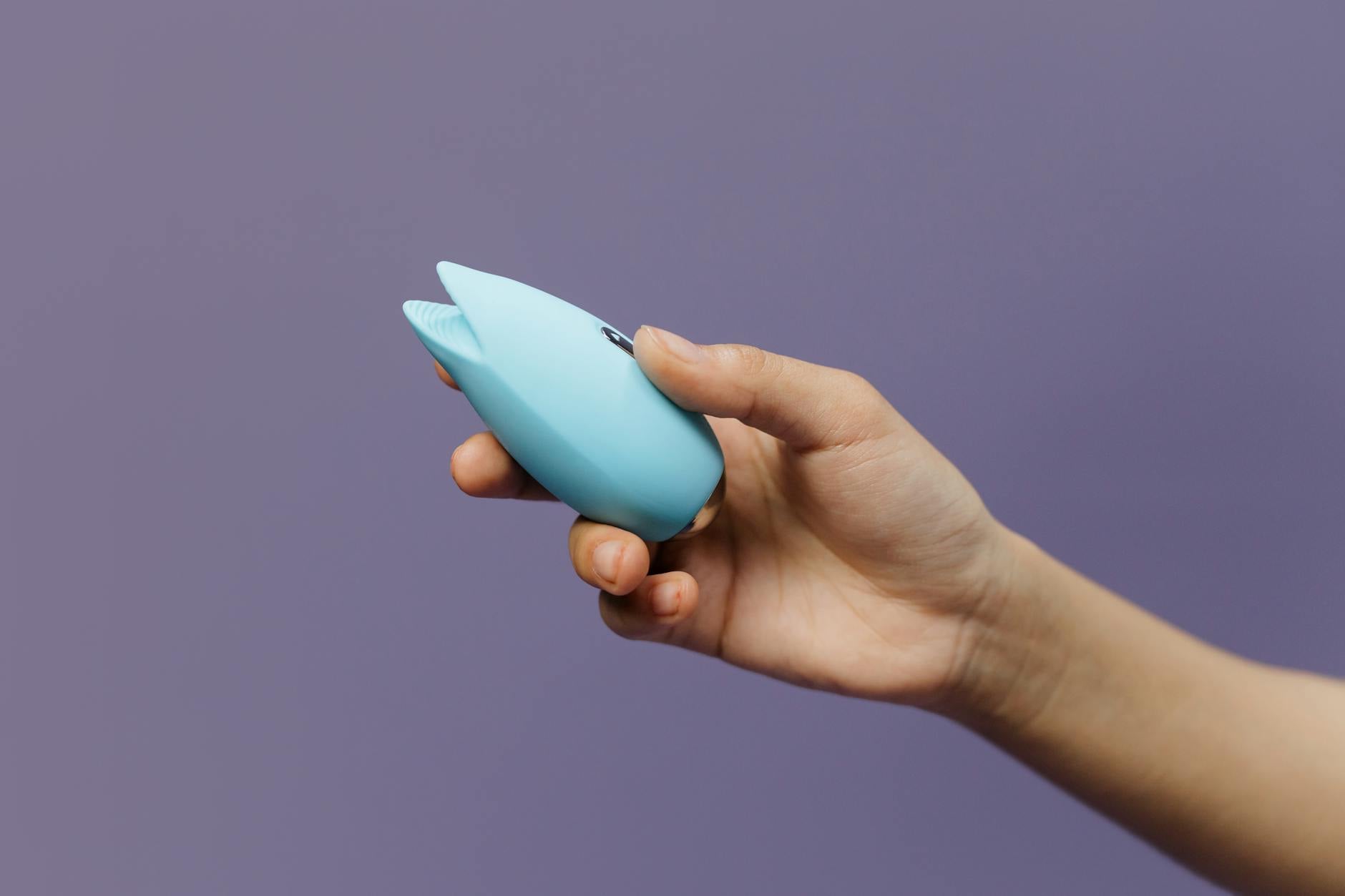
Here's what I've seen work: a lemon clitoral vibrator can actually unfreeze that dynamic. Not as a replacement. As a reset.
The pressure that ED creates (and how a vibrator helps)
Erectile dysfunction almost always comes with a psychological layer. The body stops cooperating, so the brain adds a soundtrack: "I'm broken." "She doesn't want me anymore." "I'm failing her." Your partner absorbs their own anxiety and sometimes mirrors it back to you as distance.
When your pleasure becomes dependent on one specific type of stimulation that your partner's body may not be providing reliably right now, the whole sexual interaction becomes a performance review. He's monitoring himself. You're monitoring him. Nobody's actually present.
A lemon vibrator or any clitoral vibrator changes the equation. When your pleasure comes from a device, it removes him from the equation entirely. That sounds cold. It's actually the opposite. It removes the pressure that's choking out affection.
Why this works better than you'd think
Three things shift when you bring a lemon sucker or air-suction clitoral vibrator into the conversation:
The focus moves away from penetration. Erectile dysfunction is specifically about penis function. When you're not waiting for or depending on that particular response, the whole sexual experience opens up. Oral sex, manual stimulation, vibrator play. He can be involved in your pleasure without his body performing in a specific way.
He gets to watch. One of the most powerful remedies for ED anxiety is watching your partner experience genuine pleasure. Not faked. Real. When you're using a lemon vibrator and having authentic orgasms, something shifts in his nervous system. He's not failing you. He's contributing to something beautiful. That matters neurologically.
You both get permission to slow down. Foreplay stops being a warm-up act and becomes the main event. You're not rushing toward the moment his body might cooperate. You're present in what's actually happening right now.
How to introduce it without making it weird
Timing is everything. Don't bring it up during sex or during a conversation about his ED. Bring it up outside the bedroom entirely, matter-of-factly, the way you'd mention wanting to try a new restaurant.
Something like: "I've been thinking about exploring more. I want to feel different things. Would you be interested in using a vibrator together?"
Notice what that does. It's not "Your body isn't working, so I need this." It's "I want to expand what we're doing together." Completely different nervous system response.
If he seems hesitant, ask why. Listen. Common fears: "You'll prefer it to me." "It means I'm not enough." "It's weird." All of these are valid. None of them are true, but they're worth acknowledging.
You might say: "I want you here with me when I use it. Not instead of you. With you. And I want to watch you enjoy watching me." That's honest. That's connecting.
The actual mechanics (how to use it together)
Start slow. You don't need to be fully nude. You don't need penetration on the table. Maybe you're both clothed, you're in bed together, and you use the vibrator over your underwear while he's kissing your neck or holding you.
If he's willing, he can hold the vibrator. That keeps him in an active role. He's choosing the intensity, the pattern, the placement. You're guiding him verbally. That's collaboration, not replacement.
Or he's next to you, inside you if he's able, and the vibrator is providing external stimulation to your clitoris. That's not something his body can reliably do during penetration anyway. You're not asking for something impossible.
Find what reduces anxiety. If him watching feels too vulnerable at first, maybe you use it while he's focused on kissing you or touching your body elsewhere. The sensation plus the intimacy minus the performance pressure.
The conversation underneath the vibrator
Here's what I tell couples: ED is often a signal that something in the relationship needs attention. Maybe it's stress. Maybe it's resentment. Maybe it's years of not talking about desire. The vibrator is a tool. It's not the solution. It's an opening.
While you're exploring together, actually talk. Not during, but after. "How did that feel?" "What did you like?" "What do you want to try next?" This is where the real intimacy rebuilds. Not in the orgasm. In the honesty.
Many couples find that using a lemon vibrator together opens up conversations they've been avoiding. Suddenly you're talking about what feels good, what doesn't, what you've been afraid to ask for. That conversation is more valuable than any device.
Common worries (and what's actually true)
"If I introduce this, he'll think I'm not satisfied with him." ED already told him that his body isn't cooperating. A vibrator isn't news. It's permission to find pleasure another way. That's generous, not rejecting.
"He'll feel emasculated." Many men actually feel relieved when the pressure lifts. When he realizes he doesn't have to fix everything with his body, something unlocks. That's the opposite of emasculation.
"What if he refuses?" Then you have a different conversation. Why is he refusing? Is it shame? Fear? Lack of information? Those conversations are hard, but they're necessary. You might need a couples therapist to navigate it together.
"Will it become a crutch?" No. It's a tool. Some couples use it once and move on. Some use it regularly. Some use it when ED flares and skip it when it doesn't. There's no "supposed to." There's just what works for your relationship right now.
When ED is about more than physical stuff
Sometimes erectile dysfunction is purely physiological. Sometimes it's anxiety, depression, medications, or cardiovascular issues. Sometimes it's relational. Often it's all of it at once.
If your partner hasn't seen a doctor about it, that conversation needs to happen separately from the vibrator conversation. ED is treatable. Sometimes it's as simple as a medication adjustment. Sometimes it needs therapy. Sometimes it needs both.
What a lemon vibrator or any clitoral vibrator does is buy you time and connection while he's getting actual care. It keeps the relationship alive while you're both working on the underlying stuff.
The thing nobody tells you
Some couples find that their sexual connection actually deepens after introducing a vibrator during an ED struggle. Not despite it. Because of it. Because they had to get honest. They had to be vulnerable. They had to remember that pleasure isn't about one specific outcome. It's about being present together.
Your partner's erectile dysfunction doesn't define your sex life unless you let it. A lemon clitoral vibrator, used thoughtfully, can be the reminder that there are infinite ways to connect.
People Also Ask
Can a clitoral vibrator help rebuild sexual confidence in a partner with ED?
Yes. When your pleasure isn't dependent on his penis functioning, he's freed from the pressure of single-handedly creating that pleasure. Many men report that watching their partner have genuine orgasms using a vibrator actually restores confidence over time. It's evidence that sex can still be good, that pleasure is possible, and that he can participate in creating that without it being entirely on him. The shift from "I have to make this happen" to "I get to be part of this" is huge for anxiety.
How do I know if my partner will be open to using a vibrator together?
You won't know until you ask. Pick a calm moment outside the bedroom, frame it positively ("I want to explore more with you"), and listen to his response without defensiveness. If he's hesitant, ask what he's worried about specifically. Is it insecurity? Religious beliefs? Lack of information? Different concerns need different conversations. Sometimes a doctor or therapist can help normalize the conversation if he's not hearing it from you alone.
Is using a vibrator a sign that we need to see a couples therapist?
Not necessarily. But if ED has created distance, shame, or stopped all physical intimacy, a therapist can help. A vibrator is a tool for rebuilding. A therapist is support for understanding what went wrong and rebuilding trust. They're not mutually exclusive. Some couples use one, some use both, some use neither and figure it out together. What matters is that you're both willing to address it.
Will my partner feel replaced if I use a vibrator during sex?
Only if you frame it that way. If you're using it because you're frustrated that his body isn't cooperating, he'll feel it. If you're using it as something you want to explore together, something that expands your pleasure rather than circumvents his involvement, the energy is completely different. The vibrator isn't replacing him. It's adding to what you're doing together.
What if my partner says no to using a vibrator?
Then you need to understand why. Fear? Shame? Religious or cultural beliefs? Feeling like it means you're unsatisfied? Some of these are conversations you can address together. Some might benefit from a couples counselor who can reframe the vibrator not as a replacement but as a tool for mutual pleasure. And some partners genuinely aren't comfortable, and that's information you need. Then the conversation shifts: what does he want to try instead? What would make him feel less pressured?
Can a lemon vibrator actually improve our sex life long term?
It depends on what's underneath the ED. If it's pure anxiety or relational distance, yes. Removing the pressure to perform can unlock years of stuck intimacy. If there's a medical cause, a vibrator helps manage the immediate situation while he's getting treatment. If there's deeper relationship stuff, a vibrator can help reconnect you while you address the real issues. It's not magic. But it's often the thing that makes the conversation possible.
The path forward
Erectile dysfunction doesn't have to mean the end of your sex life. It means the end of one particular version of it. A lemon vibrator, a clitoral vibrator, or any pleasure tool can be the bridge between the sex life you had and the sex life you're building now. But the real work is the conversation. That's where the actual intimacy lives.