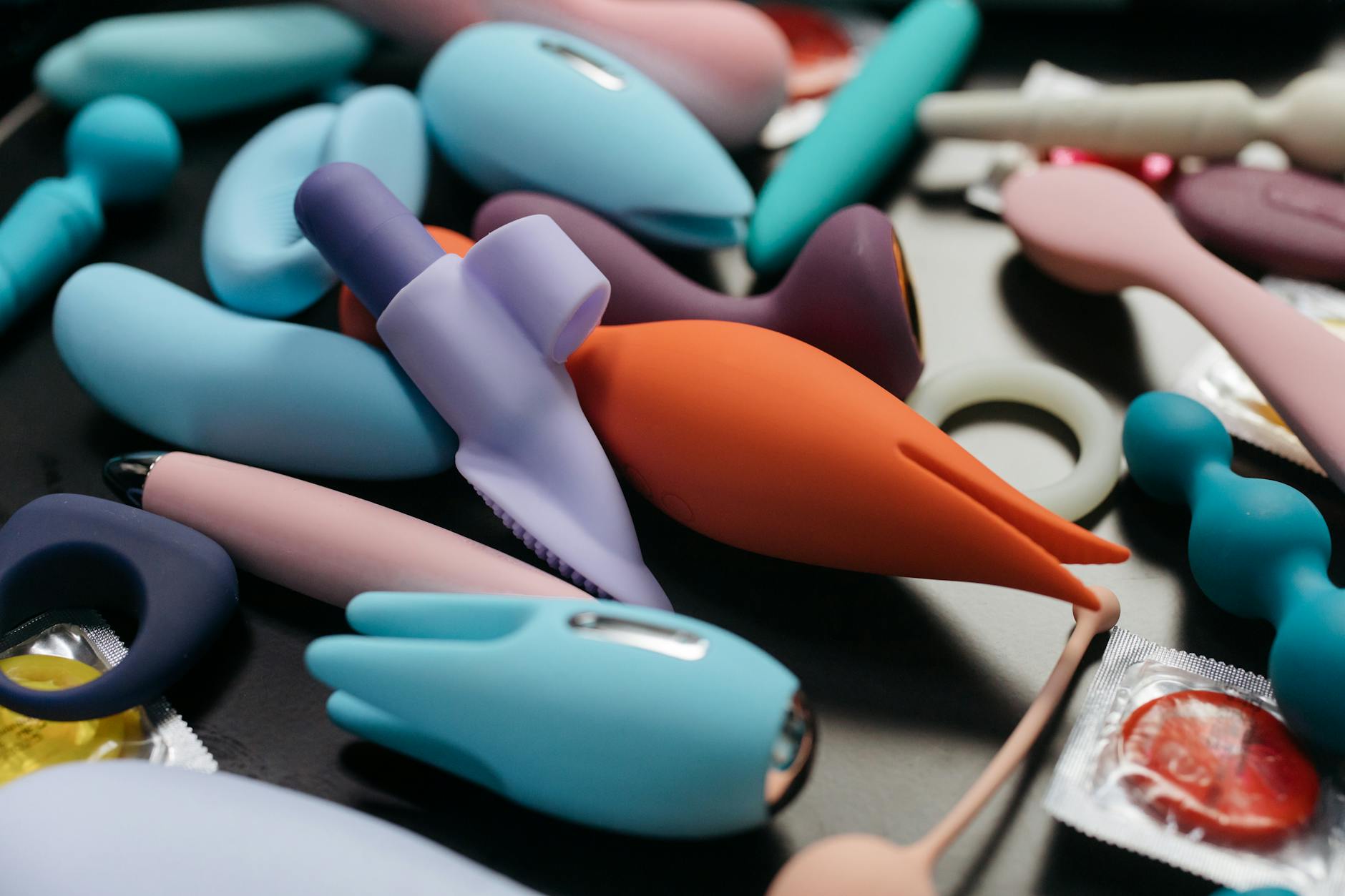
Let's talk about the thing nobody talks about
You've got a lemon vibrator. You really like it. And now there's a new partner in the picture. The question bouncing around in your head isn't subtle: when and how do you introduce it?
Here's what I've learned from years of working with couples navigating exactly this: the awkwardness isn't about the toy. It's about the gap between what you want to say and what you actually say. This post closes that gap.
Why new partners get nervous about toys
It's not irrational. The anxiety has nothing to do with the lemon vibrator itself and everything to do with what they imagine it means.
They might worry: "Does this mean I'm not enough?" or "Are they telling me I don't satisfy them?" or worst case, "Is this a test of how adventurous I am?" None of these thoughts are about your pleasure. They're about their insecurity, which is real and worth taking seriously.
But here's the thing: a lemon clitoral vibrator is not a referendum on your partner's performance. It's a tool for your pleasure, the same way a vibrating toothbrush isn't an insult to manual brushing. Your body responds to stimulation in specific ways. A lemon sucker targets those nerves with precision. That's not criticism. That's biology.
The conversation before the bedroom
This is the foundation. If this conversation goes well, everything after is easy.
Pick a moment that's neutral, not during sex or foreplay. Not right after sex either. A Tuesday evening on the couch, a walk, a moment when you're both relaxed and you've got time. The opening matters.
Try: "Hey, I want to tell you about something that's important to my pleasure, and I'd rather be honest now than have it be weird later." That's it. No apology. No preamble about how much you like them.
Then explain what you use and why. Be specific: "I have a lemon vibrator. I use it for clitoral stimulation. My body responds really well to that kind of suction pattern, and it helps me reach orgasm more reliably." You're naming a fact about your body, not making a judgment about theirs.
What you're NOT saying: "I need this because you're not doing it right." That door closes the conversation immediately.
What you ARE saying: "This is something I know about myself and my body, and I want to share it with you." Completely different energy.
How they might react (and what to do next)
Best case: "Cool, I want to learn what works for you." Easy.
Middle ground: "Um, okay, let me think about it." This is fine. They need time. Give them space to process without pressure.
Defensive: "You don't need that with me" or "I feel like you're cheating on me with a toy." This one stings, but it's actually useful information. It tells you they're either insecure about their desirability or they have a framework about sex that doesn't include solo pleasure tools.
Here's what you do: you acknowledge the fear without abandoning the truth. "I understand that feels threatening. It's not. I'm telling you about this because I want you to understand my body better, not because I want to exclude you. Can we talk about what's scaring you?"
You're not defending the vibrator. You're inviting them into a conversation about their own fears. That's grown-up partnership.
When to introduce it during sex
Not the first time. Not the second time. Wait until you've built enough comfort that penetration or foreplay is already smooth and you're both relaxed.
The timing matters because introducing something new when you're already nervous about performance makes everything worse. You want to bring it in when you both feel secure. Usually that's after three to five intimate encounters, depending on your dynamic.
The intro should be matter-of-fact. "I'd like to use this. Do you want to watch, or would you rather I use it while we're together in some other way?" You're offering options. You're not making them feel like a spectator at their own sex life.
Using it together (the actual mechanics)
Here's the practical part.
A lemon vibrator, especially one like the Lem, works best with a little lube and direct contact. You control it. Your partner doesn't need to hold it or figure out the angle. That takes pressure off them to "perform" correctly.
Your partner can:
- Be inside you while you use it externally (amazing, by the way)
- Hold you while you use it
- Kiss you, talk to you, make eye contact
- Use their hands on other parts of your body
- Just be present
What they shouldn't do: take over the vibrator, try to position it themselves, or stand back like they're watching a show. That kills the intimacy. It's teamwork, not a performance.
Set expectations beforehand: "When I use this, I like to control the rhythm. What I'd love is if you could kiss me / touch me here / hold me." You're telling them their role is still central, just different.
Managing the emotional part
Some partners watch you orgasm with the lemon vibrator and feel a little left out. This is normal and worth addressing.
You might say after: "That was incredible. You made that better just by being here with me." You're not lying. Presence matters. Chemistry matters. The tool is just a facilitator.
If they seem withdrawn or quiet afterward, ask directly: "How are you feeling about what just happened?" Give them space to say "It was weird" or "I didn't know what to do with myself" without judgment. Then you problem-solve together.
Maybe next time they hold you. Maybe they use the vibrator on you while you guide the motion. Maybe you use it solo while they're inside you. There are a hundred variations. The conversation is what makes them all work.
When to keep it private
Not every partner is ready for this, and not every relationship requires it.
If your partner has expressed that this crosses a boundary for them, and you've genuinely listened to why, you have a choice: accept the boundary or reassess the compatibility. You cannot negotiate someone's discomfort about sexuality by repeatedly introducing the thing they're uncomfortable with.
Your pleasure matters. Their emotional safety matters too. Both can be true.
Some couples never use toys together and have fulfilling sex lives. Some couples build their entire intimacy around them. There's no hierarchy. There's just what works for you.
The bigger picture
Introducing a lemon clitoral vibrator to a new partner is actually a conversation about something bigger: are you both willing to talk honestly about sex?
If you can navigate this conversation without shame, with clarity, and with genuine care for each other's feelings, you've actually built something valuable. You've created a template for every other vulnerable conversation you'll need to have.
Your pleasure isn't selfish. Your body's needs aren't unreasonable. And a partner who can hear "this is what my body needs" without making it about their ego is someone worth keeping around.
That's the real intimacy.
People also ask
Will my new partner think I'm weird for owning a lemon vibrator?
No. Most people have used or own some kind of sexual wellness tool by the time they're dating in their 20s, 30s, or beyond. And the ones who haven't thought about it usually respond with curiosity, not judgment, when someone they care about brings it up thoughtfully. You're not unusual. You're just honest.
Should I hide my lemon vibrator from a new partner?
Not long-term, no. Hiding things you care about creates distance. Early on, you don't need to introduce it immediately. But if the relationship is moving toward actual intimacy, honesty about your body and what it needs becomes important. Hiding it just means the eventual reveal will feel more shocking than it needs to be.
How do I know if my partner is uncomfortable with toys but won't say it?
Watch for: sudden quietness after you use it, avoidance of the topic, deflection when you bring it up, or initiating sex differently (like insisting on a position where you can't use it). Sometimes people withdraw rather than say "this bothers me." That's a sign to have a direct conversation: "I'm sensing some hesitation. Can you tell me what's going on?" Often they'll open up when given explicit permission.
What if my partner wants to use the lemon vibrator on me but I'd rather use it myself?
Tell them. Control over your own pleasure is not negotiable. You can invite them to participate in other ways, but if they're trying to commandeer the vibrator, that's crossing a boundary. Use your words: "I appreciate that, but I like controlling this myself. What I'd love instead is..." and offer an alternative role that keeps them engaged.
Can we use a lemon vibrator without it affecting our sex life?
Absolutely. For some couples, the vibrator becomes part of their regular routine. For others, it's an occasional thing. For some, it's solo only. The key is that you've communicated about it and both partners feel included in the decision. When there's transparency and consent, toys enhance connection instead of threatening it.
How do I bring it up if we've already been intimate without mentioning it?
Don't panic. You can say: "Something I've been thinking about bringing up with you. I have a vibrator I really like, and I'd like to use it sometimes when we're together. I want to be honest about things that matter to my pleasure." It's a little more awkward if you've already been intimate, but honesty now is still better than secrets later. Most partners respond with "Why didn't you say something sooner?" rather than anger.
One more thing
Your body is not a problem to be solved. A lemon vibrator isn't a sign that something's wrong with you or your relationship. It's just a tool that works with your neurology, your anatomy, and what gets you there.
A partner who can hear that and say "Tell me how to be part of that" is already halfway to understanding what real intimacy is.
If you're navigating a new relationship and need more guidance on building communication around pleasure, reach out. We're here to help you build the kind of connection where honesty feels safe.