How IUDs change your nervous system (and what that feels like)
Let's be real: nobody tells you that an IUD can mess with your ability to get aroused or feel sensation. You get the insert, your period might disappear or lighten, and then you notice that touching yourself feels... less? Duller? Or like you're swimming through water to get to arousal. That's not you going crazy. That's actually your body responding to a sudden shift in hormonal levels.
Hormonal IUDs (like Skyla, Mirena, or Kyleena) release a synthetic progestin directly into your system. Unlike the pill, which goes through your digestive system, the IUD's hormone hits more locally and more consistently. This changes your baseline dopamine and norepinephrine levels. These are the chemicals your brain uses to register touch, build arousal, and create that anticipatory feeling that makes sex feel good.
Some people adjust in a few months. Others notice the change is permanent, at least while the IUD is in. And honestly, that deserves a conversation with your doctor, not shame.
What sensation changes feel like after IUD insertion
Three patterns I hear from people adjusting to hormonal IUDs:
Arousal feels slower to build. You used to get turned on in five minutes. Now it's taking 20. Or you're not getting turned on at all, even when the setting is right. This isn't loss of desire so much as a dampening of the nervous system's speed. Your clitoris still has the same nerve endings. The signal is just moving slower.
Touch feels less intense. This is the weirdest one to describe. You're touching yourself the way you always have, but it feels like you're wearing gloves. The sensation is there, but muted. Some people describe it as "numb" but it's usually not complete numbness. It's more like the volume got turned down.
Orgasms become harder to reach, or feel different. For some, orgasms take twice as long to achieve. For others, the orgasm itself feels less intense or more localized. A few people report that the emotional release part of orgasm (the mental satisfaction) disappears even when the physical sensation is still there.
None of this is permanent. Most of it is manageable once you know what's happening.
Why lemon clitoral vibrators work better during this adjustment
Here's the mechanics of it. When your nervous system is dampened by hormonal shift, you need stimulation that's consistent, precise, and sustained in a way that manual touch or most wand vibrators just can't deliver.
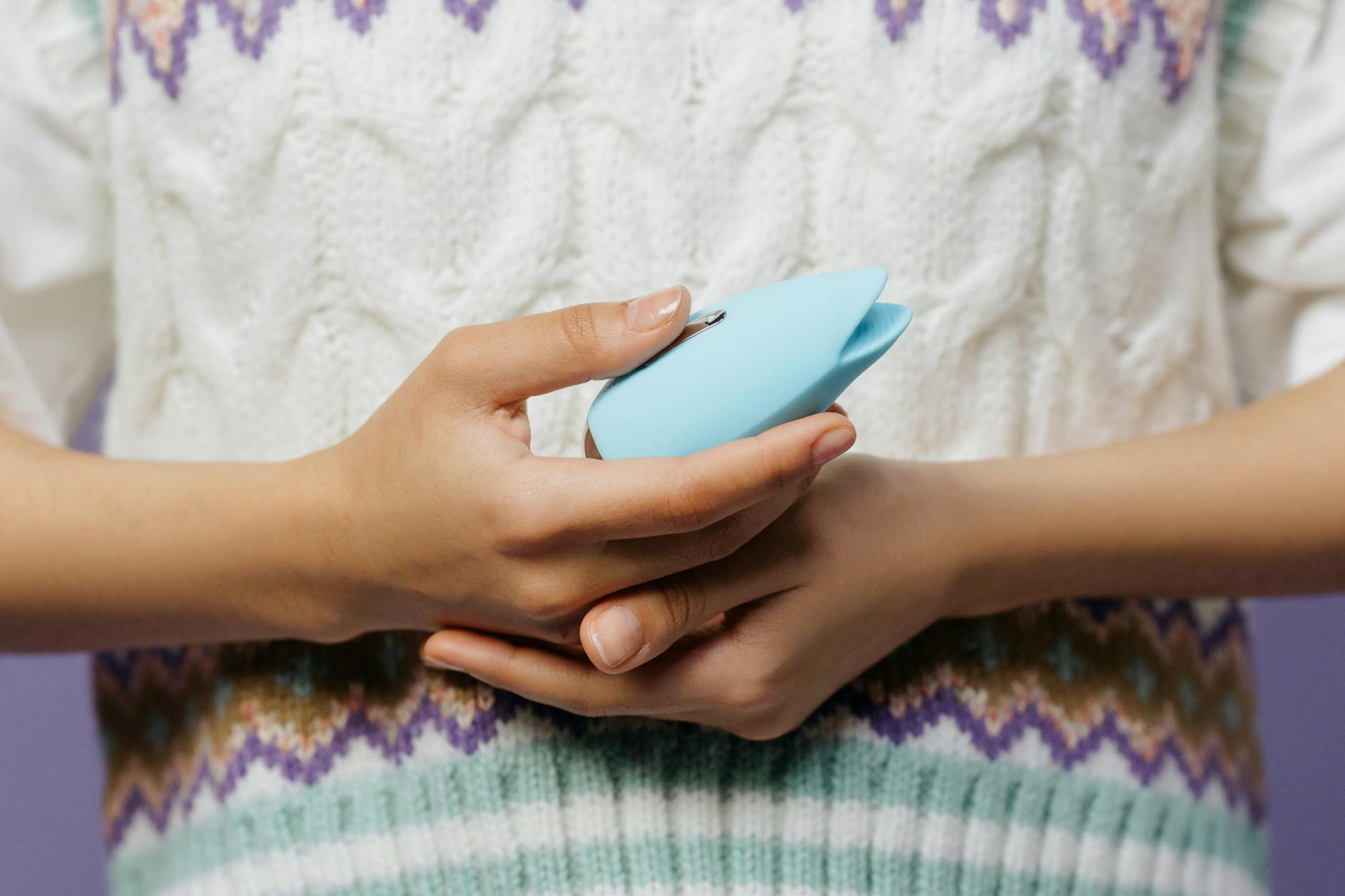
Lemon vibrators use air-suction technology, which creates a gentle seal around the clitoris and stimulates via suction and pulsing rather than vibration alone. This matters because:
Suction bypasses the dampening. Vibration at, say, 3000 Hz might feel dull when your nerves are moving slowly. But suction creates a physical sensation (not just a vibration) that your body registers differently. It's like the difference between hearing someone call your name versus feeling a tap on your shoulder. One gets through the noise better.
The sensation is more localized. Wand vibrators scatter stimulation across a wider area. Lemon vibrators concentrate it on the exact spot that matters. When sensation is already muted, precision helps. You're not asking your nervous system to work harder. You're asking it to work smarter.
Rhythm and pattern choice matter. A lemon vibrator like the Lem has multiple pulse patterns (not just one speed). Some patterns mimic the body's own rhythms. Others use ramps or waves that keep your nervous system engaged and prevent habituation (the sensation becoming invisible because it's too predictable).
Many people find that patterns 4 through 7 (the more complex pulse sequences) work better than the simple steady vibration. Your nervous system gets more information to process, which means less dulling out.
The four-step adjustment strategy when sensation feels muted
If you just got an IUD and pleasure has shifted, here's what actually helps.
Step one: Give yourself three months before deciding anything. Your body is adjusting to a new hormone baseline. Most sensation changes stabilize after 8 to 12 weeks. If you're only two weeks in and panicking, you might not yet be seeing the final picture.
Step two: Start with longer warm-up and lower intensity. If you normally use a Lem at level 5, start at level 2 or 3. If your warm-up used to be five minutes, budget 15. You're not broken. Your nervous system just needs more runway to get rolling.
Step three: Experiment with rhythm and pattern. Don't just stick with pattern 1. Cycle through 3, 4, 5. Some people find that a pulsing pattern (rather than constant vibration) cuts through the dampening better. Others do better with the ramp patterns. You're looking for the one that makes arousal feel alive again, not like you're checking a box.
Step four: Use lube. Hormonal IUDs don't usually change vaginal lubrication the way menopause does, but some people notice a slight shift. Water-based lubricant costs nothing and removes one variable. If sensation is already muted, slickness helps reduce friction without adding it.
When to talk to your doctor about it
If three months have passed and sensation still feels completely absent, or if arousal has disappeared entirely and it's affecting your quality of life, mention it. You have options.
Some doctors will adjust your expectations ("this is normal, your body will settle"). Others will suggest switching to a non-hormonal copper IUD, which doesn't affect your nervous system the same way. A few will talk about whether the trade-offs of the IUD are worth it for you compared to other contraception.
None of these conversations are failures. They're information gathering.
The emotional piece matters as much as the physical one
Here's something nobody talks about: a lot of the flatness people feel after IUD insertion isn't purely physical. There's also a psychological component. You got an IUD because you didn't want to think about contraception anymore. But now you're thinking about your sexuality constantly because something feels off. That awareness itself can dampen arousal.
If you have a partner, telling them what's happening ("My IUD changed how I experience sensation, so I'm giving myself time to adjust") separates the issue from the relationship. You're not rejecting them. You're managing a medical adjustment. That distinction matters for intimacy.
The short version
Hormonal IUDs change how your nervous system registers touch and builds arousal. That's neurobiology, not weakness. Lemon clitoral vibrators help by delivering precise, consistent stimulation that doesn't rely on your nervous system being at full speed. Suction-based stimulation tends to work better than vibration alone when sensation feels muted. Give yourself three months, adjust your expectations during warm-up, experiment with patterns, and talk to your doctor if it's not improving.
Your pleasure matters. That's the starting point for everything else.
People also ask
Do hormonal IUDs permanently affect sexual sensation?
Not usually. Most people find that sensation changes settle within 8 to 12 weeks as the body adjusts to the hormone baseline. Some people experience lasting changes but they're often manageable with the right tools and communication. If it's been three months and nothing has shifted, that's a conversation to have with a menstrual health specialist or gynecologist.
Can I use the same lemon vibrator settings I used before my IUD?
Maybe not, at least at first. Many people find they need to start at lower intensity and spend more time on warm-up after IUD insertion. Your nervous system is processing new hormonal information. You might need to ramp up more slowly than you used to. As sensation normalizes (usually within a few weeks to months), you can return to your old settings if you want to.
Why does suction feel different than regular vibration when sensation is muted?
Suction creates a physical seal and pressure sensation that registers through different nerve pathways than vibration alone. When your nervous system is dampened by hormonal shift, these different pathways can feel more distinct and less likely to fade into the background. Think of it like the difference between hearing someone whisper versus feeling them tap your shoulder. The tap gets through the noise better.
Should I remove my IUD if it's affecting my sex life?
That's a personal decision that depends on how much it's affecting you, how many months you've given your body to adjust, and what your contraceptive options are. Many people find that sensation changes are manageable once they understand what's happening and adjust their approach. If after three months of adjustment the change is devastating to your quality of life and your doctor doesn't see other options, removal is worth discussing. But most adjustment challenges improve with time and the right tool.
How long does it take to adjust to an IUD's effects on sensation?
Most people notice stabilization within 8 to 12 weeks. Some adjust faster (by week 4 or 5), and a smaller percentage find the changes persist beyond three months. Individual hormonal sensitivity varies widely. Keeping a brief note of what you're noticing (arousal speed, sensation intensity, orgasm quality) can help you see the pattern and know whether you're stabilizing or whether you need to talk to your doctor.
Can a lemon vibrator help if my IUD caused complete numbness?
If you're experiencing complete numbness (zero sensation) in your genitals, that's worth mentioning to your doctor. That's less common with hormonal IUDs than sensation dulling, and it might point to something else happening. If it's mild-to-moderate dulling (you can feel touch but it's less intense), lemon vibrators and other clitoral vibrators often help. The precision of suction-based stimulation makes a difference when baseline sensation is low.
What happens next
If you're navigating sensation changes after IUD insertion, you're not alone, and it's not permanent. The combination of time, adjusted expectations, and the right tool usually gets people back to pleasure that feels authentic and satisfying.
Many people find that tools like lemon clitoral vibrators become part of their regular pleasure practice not because something is broken, but because they deliver a kind of consistent, precise stimulation that just feels better. That's worth exploring at your own pace.
If you have questions about contraception, sensation changes, or how to navigate this transition with a partner, reach out to Hell A Nancy's. We're here to help.