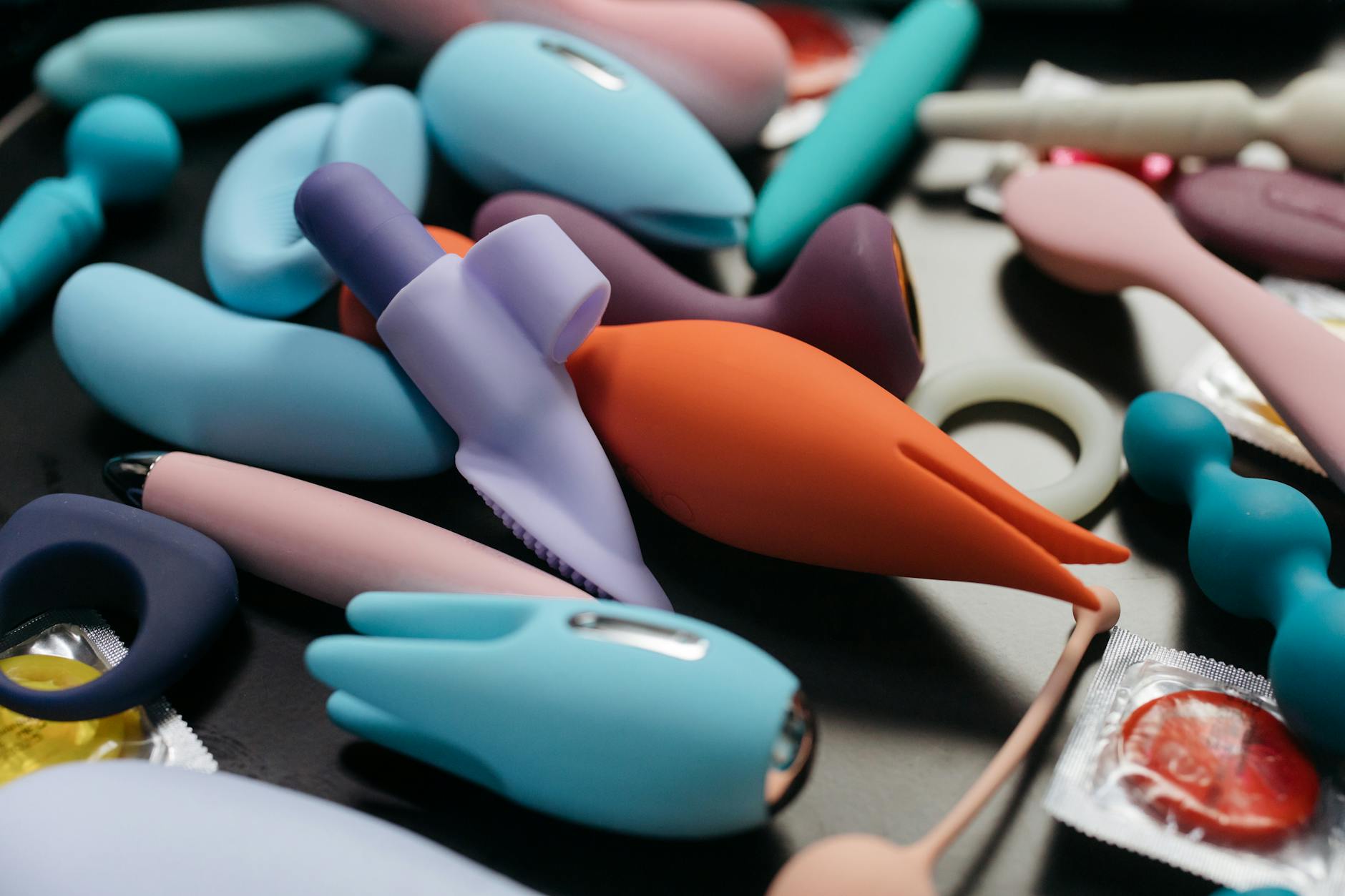
Let's be real about the empty nest transition
Empty nest doesn't happen to your body. It happens to your life. And somehow, that shift manages to affect both.
When the last kid leaves home, you don't just lose the sound of arguing about homework or the smell of pizza in the kitchen. You lose a rhythm. A structure. A permission structure, honestly. The bedroom goes from a place where you're listening for footsteps to a space that's actually yours. And that psychological shift changes everything about how desire shows up.
I've worked with dozens of couples navigating this transition, and here's what I see: either sexuality blooms again beautifully, or it gets stuck. The difference is rarely about attraction or biology. It's about whether you actively reclaim that space or just assume the old version of pleasure will automatically return.
Why empty nest resets desire
Three things happen simultaneously when kids move out.
First, the cognitive load lifts. You're not subconsciously listening for a knock on the door. You're not calculating whether you have fifteen or forty-five minutes. The mental space that was occupied by logistics and vigilance opens up. Some of my clients describe it as the first time they can actually breathe during sex, which is frankly devastating and beautiful at the same time.
Second, something older resurfaces: the version of you from before parenting. Not regression, exactly, but access. You remember wanting things that weren't on anyone else's schedule. Pleasure that was about your body, not your role. That person is still there. Empty nest is permission to find them again.
Third, and this matters, you've grown. Twenty years of partnership, or solo navigation, or any version of midlife, has taught you things about your own body and what actually works for it. That knowledge is gold. Young you didn't have this information. Midlife you does.
The pleasure gap after transition
Here's the tricky part: reclaiming desire after empty nest isn't automatic. I see this pattern constantly.
The first few months, couples are excited. They're sleeping later. They're talking more. There's optimism. But then around month three or four, that new energy plateaus. What felt exciting (finally having privacy) gets ordinary. The old patterns of tiredness and distraction creep back in. Without intention, you're back where you started, just with an emptier house.
This is where most people assume the spark is gone for real. It's not. It's dormant because you haven't actually practiced accessing it yet. Your body and mind need to rebuild the pathways to pleasure the same way you rebuild any skill after a long break.
Lemon vibrators matter here because they're not nostalgia. They're not trying to recreate what used to work. They're a fresh tool for rediscovering what works now. At forty, fifty, or beyond, your pleasure response is different than it was at twenty-five. It's often deeper, more specific, and honestly more intense. But it needs the right conditions to activate.
Why lemon sexual toys fit this moment
Lemon vibrators, particularly the suction-style design, work specifically well for midlife bodies navigating this reset for three reasons.
First, they require intention. You can't half-engage with a clitoral vibrator the way you can with passive touch. Using it means you're choosing pleasure deliberately. That psychological choice rewires something. It's not something that happened to you. It's something you decided.
Second, they deliver sensation that cuts through the noise. After years of touch that was partly distracted or partly routine, the precise stimulation of a lemon sucker reintroduces intensity. Women I work with often describe it as remembering what arousal actually feels like. That clarity is a reset button.
Third, they're solo-friendly or partner-integrated, depending on your situation. If you're rebuilding solo, a lemon clitoral vibrator lets you map your own pleasure on your own timeline. If you're in a partnership, it creates a conversation. "I want to try this" opens dialogue in a way that silence doesn't.
Starting the conversation with a partner
If you're coupled, empty nest is the perfect time to renegotiate pleasure together.
But this conversation doesn't start with "I want to buy a vibrator." It starts earlier. It starts with acknowledging that something shifted. "Hey, we have the house back. What do we want this to feel like?" That question opens space for honesty that most couples skip.
Some partners get nervous about vibrators. They imagine it means something about them is insufficient. It doesn't. It means something about the situation has changed, and you both get to choose how to meet it. A lemon vibrator isn't a judgment on your partner's capacity. It's a tool that delivers a specific kind of stimulation that bodies benefit from at this stage of life.
If your partner is hesitant, the honest conversation is this: "I want to feel more pleasure. Not instead of you. Alongside you. This helps." Most people can hear that. Most people want their partners to feel good.
Practical steps to restart your pleasure practice
Four things I recommend to almost every client navigating this transition:
First, claim the space physically. Put something beautiful in your bedroom that belongs to you and the pleasure you're building. A new candle. A drawer that's yours. A sense that this room is an adult space with permission built into its walls.
Second, schedule it. I know that sounds unromantic. It's the opposite. Spontaneity is great when you have it, but you don't. You have years of a scheduled body. You know how to show up for something that's on the calendar. Put pleasure on the calendar. Wednesday night. Sunday morning. Whatever fits. Knowing it's coming helps your brain and body prepare.
Third, start solo. If you're nervous about a lemon vibrator, don't introduce it in a partnered context first. Use it alone. Figure out what you like. Map your own pleasure. Then you bring that knowledge to a partner with confidence instead of uncertainty.
Fourth, give it time. Pleasure pathways take weeks to rebuild. You're not looking for the same orgasm you had at twenty-five. You're looking for the orgasm you can have now. That's different. Better, usually. But it requires patience.
When to involve your partner
If you're in a partnership and you want to integrate a lemon vibrator into shared pleasure, timing matters.
Don't ambush them with it. Don't wait until the moment. Have the conversation when you're both dressed and calm. "I got something I want to try. Would you be open to that?" Most partners say yes. Some need time. Some need to understand what it is and how it works.
The first time you use it together, go slowly. Use it solo while your partner watches or touches you elsewhere. Let them see that you're the one driving the sensation. It's not replacing them. It's including them in something that feels good to your body.
Many couples find that once they integrate a clitoral vibrator into their routine, sex becomes more frequent and more satisfying for both people. That's not a coincidence. You're more likely to want sex when you know you'll have a good experience. Your partner benefits from your enthusiasm. Everyone wins.
The grief and joy of this transition
Honestly, reclaiming pleasure after empty nest comes with something else: loss. You're grieving the version of yourself who peeked through the cracked door and whispered "Go to sleep." That version showed up for your kids. That version was real.
You don't go back to being that person. You move forward to someone who integrates that version with the rest of who you are. And that person gets to have pleasure again. Not nostalgia pleasure. Present-moment pleasure.
Lemon vibrators aren't about going backward. They're about going forward into a phase of life where you get to be fully sexual, fully present, fully yours. That's the actual gift of empty nest. Not the loss of your kids. The return of yourself.
Frequently asked questions
What if my partner feels threatened by a lemon vibrator?
That reaction usually comes from fear, not actual threat. He or she might worry it means you're not satisfied, or that they're being replaced. The honest conversation is: "I love you. I also want to feel more in my body. This tool helps me do that. I want to share that with you." Frame it as expansion, not replacement. If your partner is still resistant after that conversation, couples counseling can help you both process what's really underneath the hesitation.
Can I use a lemon vibrator if I have low sensation from years of routine stimulation?
Absolutely. The suction mechanism on a lemon clitoral vibrator delivers sensation differently than friction-based toys, which makes it often more effective for people who've numbed out. Start on the lower settings and work up. Give your body three to four weeks to rewire. Most people report increased sensitivity within that window. If you're on medication that affects sensation, definitely mention that to your doctor, but lemon vibrators often help bridge that gap.
Should I use a lemon vibrator alone or with my partner first?
Solo first is my standard recommendation. You learn what you like without any performance pressure. You figure out settings, duration, what position works for your body. Then you bring that knowledge to a partner. It's the difference between "Let's try this together and figure it out" and "I know what I want and I'm excited to share it." The second version is more confident and more pleasurable for everyone.
What if I'm single after empty nest?
Then a lemon vibrator is even more important. You're not waiting for someone else's availability or mood. Your pleasure is fully in your hands. Use that. Build a solo practice that feels good, that connects you to your own body, that reminds you what desire feels like. That foundation is gold whether you stay single or eventually partner up. You're teaching yourself what you deserve, and that knowledge never leaves.
Does age matter when I'm restarting pleasure after empty nest?
Not in the way you'd think. Yes, things shift hormonally in your fifties and beyond. But most of those shifts are manageable or even beneficial once you have the right approach. I have clients in their sixties reporting some of the best orgasms of their lives. The difference is they're not fighting their bodies. They're working with them. A lemon vibrator adapts to midlife bodies beautifully.
How long does it take to feel pleasure again after empty nest?
That depends on how long it's been dormant and what else is happening in your life. If you're also managing stress, health issues, or relationship friction, it might take six to twelve weeks. If it's mainly an access problem, three to four weeks of consistent practice usually rewires things. The key word is consistent. Once a week is better than nothing. Three times a week is where most people start to feel real change. You're rebuilding neural pathways, not flipping a switch.
What comes next
Empty nest is not an ending. It's a recalibration. You get to decide what pleasure looks like in this chapter. You get to try things you didn't have time or privacy for before. You get to know your body as it is now, not as it was thirty years ago.
If you're nervous about that, that's normal. If you're excited, that's also normal. Both can be true. A lemon clitoral vibrator is just a tool. The real work is the permission you give yourself to want it.
The bedroom that used to be filled with parenting is now a space for your pleasure. That's not indulgent. That's self-respect. If you want to talk through what that could look like for you specifically, reach out. That's what I'm here for.