
Best Lemon Vibrator for Couples During Longer Foreplay
Let's be real. The moment you mention bringing a toy into bed, something shifts in the room. Suddenly it's not about pleasure anymore. It's about insecurity, comparison, or the unspoken question: "Do you need this because I'm not enough?"
I've worked with hundreds of couples who've had this exact standoff. And here's what I've learned. A lemon vibrator isn't an indictment of your partner's skills. It's an invitation to slow down together.
Why lemon vibrators change the foreplay game
Most people approach toys the way they approach sex itself. Fast. Goal-oriented. Get there, get done. But a lemon clitoral vibrator asks for something different. It asks for patience.
Here's the mechanical reason. The Lem and other lemon vibrators use suction and micro-vibrations, not heavy thrusting. That means they work best when the body is already primed, already warm. You can't rush into it. You have to build. And when you're building together, foreplay stops being something you do to each other and becomes something you do with each other.
I'm talking 20 to 40 minutes of touch, conversation, and gradual intensity. Not because the toy requires it, but because that's when it actually feels good. And that's when your partner feels less like a supporting actor and more like the lead.
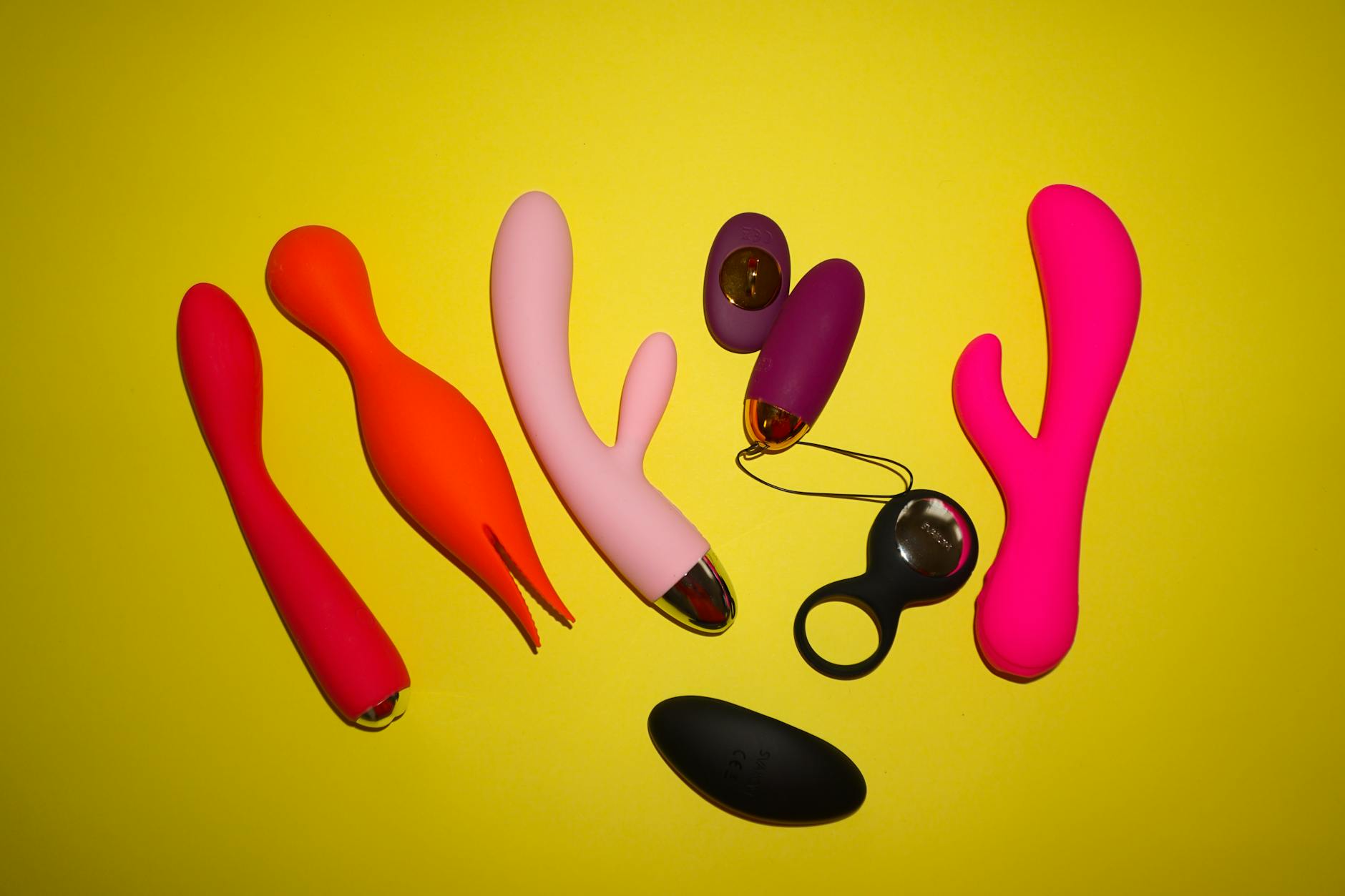
Photo by FounderTips on Pexels
The conversation you actually need to have
Don't ask for permission. Propose an experience.
Wrong opener: "Hey, I want to try a vibrator because clitoral stimulation is more efficient."
Right opener: "I've been thinking about us spending more time on foreplay. Like, really extended foreplay. Not rushing. I found something that might help us slow down together."
Notice the difference. One is clinical and isolating. The other is collaborative and honest about what you actually want, which is more time, more touch, more of them.
Then show them. Don't describe it like you're reading an instruction manual. Let them hold it. Let them feel the weight, the texture. Let them ask questions without judgment. If your partner is uncomfortable, that's useful information. But often, the discomfort isn't about the toy. It's about the vulnerability of admitting you want something different.
That vulnerability is where intimacy lives.
Choosing the right lemon vibrator for couples
Not every vibrator works the same way in partnered sex. You need something that doesn't demand your full attention while still delivering.
Look for these features:
1. Quiet operation. A loud toy becomes a distraction. You're thinking about the noise instead of the sensation. The Lem is designed for discretion, which means you can focus on each other instead of worrying about the sound.
2. Intuitive controls. Your partner should be able to hand it back to you or adjust it without a learning curve. Buttons, not app connectivity. Keep it simple.
3. Ergonomics that work during partnered contact. Some lemon vibrators are too bulky to position comfortably when someone else is also touching you. A sleeker design like the Lem gives you space to move together.
4. Water-resistant, not just water-safe. You might want to use it in the shower as foreplay. You might get sweaty. Build that flexibility into your choice.
How to actually integrate it into sex
Timing matters more than technique.
Start without the toy. Twenty minutes of hands, mouth, attention to your partner's body. The goal is for both of you to be fully aroused before the vibrator even enters the picture. Your partner touching you while you warm up creates a shared experience, not a performance.
When you introduce the lemon vibrator, do it as an addition, not a replacement. You're not setting your partner aside to use a toy. You're asking them to stay close while you add something. They can touch your thighs, your back, your face. They can kiss you. The toy is an instrument in a duet, not a solo.
This is where the extended foreplay really pays off. If you're not tired yet, if your partner isn't watching the clock, if the mood is built on connection instead of routine, the toy becomes natural instead of awkward.
Start on the lowest setting. Yes, even if you know you can handle more. Your partner is watching. Letting them see your pleasure respond gradually, seeing the toy reveal sensations you didn't know existed, that's powerful for them. It's not comparison. It's invitation.
What happens to your partner's role
Here's the anxiety that usually surfaces. "If the vibrator gets her there, what am I doing?"
Everything else. You're building anticipation. You're reading their body. You're choosing when to increase the intensity, when to slow down, when to change positions. You're the director. The toy is an instrument.
Some partners find it hot to watch. Some like to use it on their partner while also touching them. Some take turns. There's no correct way. But the conversation that happens after, when both of you are still warm and close, that's where you figure out what worked and what didn't. Not from a mechanics perspective. From a connection perspective.
If your partner is still feeling unsure, you might ask them to control the toy for part of it. Hand it over. Watch them figure out the rhythm that works for you. Suddenly it's collaborative again.
The unexpected intimacy of going slow
Here's what I tell couples who are nervous about this. The lemon vibrators work best when you're not in a hurry. That's actually the point. We've normalized sex as a 15-minute event. Most couples never spend more than 30 minutes from start to finish. A lemon clitoral vibrator asks you to block 45 minutes or an hour.
That time alone changes the dynamic. You can't be thinking about work. You can't be calculating logistics. You have to be present. And presence is what sustains long-term partnerships.
Your partner will remember that you wanted to slow down, that you wanted to spend time together, that you were willing to be vulnerable enough to ask for what works for your body. That matters more than the orgasm.
When to use it and when not to
Not every sex session needs extended foreplay and a vibrator. Sometimes you want quick and familiar. That's normal. Build this into your repertoire as an occasional deepening, not a replacement for your regular rhythm.
Weekends work better than weeknights. When you have time and you're not thinking about the alarm. When you can actually relax after instead of rolling over and sleeping.
Use it when you're feeling connected. Not when you're trying to fix distance. A toy won't solve a relationship problem. But it can deepen something that's already there.
FAQ
Can I use a lemon vibrator with a partner who has never used toys before?
Yes, but start with conversation weeks before the toy ever appears. Normalize the idea. Watch educational content together if that helps. When the Lem does arrive, keep pressure low. Let them lead on whether to use it and when. Some people need time to warm up to the idea, and that's okay.
What if my partner is uncomfortable with vibrators but wants to make me happy?
Stop. Don't use a toy with someone who's doing it as a favor. That creates resentment, not connection. Instead, ask what they're actually uncomfortable with. Is it the idea? The sensation? The narrative they've constructed about what it means? Often you can address the actual concern without forcing the toy. Your pleasure matters, but not more than your partner's genuine comfort.
How do I know which lemon vibrator to actually buy for couples play?
Start with reviews from people who mention using it with partners. Not just solo reviews. Look for mentions of quiet operation, ease of cleaning, and durability. The Lem from Hello Nancy is specifically designed to integrate into partnered sex without being jarring. But the right toy is the one that fits both of your comfort levels, not what an article recommends.
Should I let my partner use the vibrator on me, or do I control it?
Both. Take turns. See what feels good. Some people love the autonomy of controlling their own sensation. Some love having their partner direct it. There's no hierarchy here. Try different approaches and notice what creates the most connection, not the quickest result.
What if the vibrator is making me come too fast and I want to savor it longer?
Use it in intervals. Build to a point, ease off, let the sensation settle, then continue. You're not trying to race to the finish. You're exploring what your body is capable of. This is where slow foreplay becomes genuinely valuable. Your partner can read your cues and adjust without needing instruction.
How do I prevent a lemon vibrator from becoming a crutch in my relationship?
Use it intentionally, not reflexively. Plan it. Enjoy it. But also keep sex varied. Some sessions with toys, some without. Some fast, some slow. The goal is a full range, not dependence on one approach. If you notice either partner preferring the vibrator to actual touch, that's a sign to pause and reconnect without it.
The long view
I work with couples in their 40s, 50s, and beyond who discovered toys together and found a new language for desire. I also work with couples in their 20s who were too embarrassed to even ask. The toy isn't what changed things. It was the willingness to be vulnerable with someone and say, "I want to explore this together."
A lemon vibrator is a permission slip to slow down. To ask for what you actually want. To spend time together without an agenda. If you use it that way, it stops being about the toy at all. It becomes about the person next to you.
Ready to have that conversation? Start here. Pick a calm moment. No pressure. No expectation of immediate action. Just honesty about wanting more time, more presence, more of each other. The toy is just the excuse to get there.
References
Gottman, J. M., & Silver, N. (2015). The Seven Principles for Making Marriage Work. Harmony.
Meuleman, B., van Lankveld, J., & Achter, H. (2019). The impact of relationship context on sexual pleasure and satisfaction in women: A systematic review. Archives of Sexual Behavior, 48(3), 787-804.
Meston, C. M., & Frohlich, P. F. (2000). The neurobiology of sexual function. Archives of General Psychiatry, 57(11), 1012-1030.